Could You Handle an Unexpected Night in the Wilderness?
A simple day hike, hunting trip, or weekend camping adventure can become an unexpected survival situation. Changing weather, an injury, a wrong turn, or equipment failure can quickly turn an ordinary outing into something more serious.
Learning wilderness survival skills isn’t about expecting the worst every time you head outdoors. It’s about developing the knowledge, judgment, and confidence to recognize problems early, make safer decisions, and respond when things don’t go as planned.
You don’t need to master every survival technique before enjoying the outdoors. You need to understand the basics, prepare for the conditions you’re likely to encounter, and build your skills through experience.
Your first wilderness survival goal is simple: Learn how to avoid preventable emergencies and make sound decisions when conditions change.
Start with what you know. Practice what you learn. Build your confidence over time.
How to Use the Wilderness Hub
The Wilderness Survival & Skills Hub is designed to help you develop practical outdoor knowledge, whether you’re preparing for your first day hike or building on years of experience in the woods.
We’ve organized the guides around four learning levels that take you from understanding survival fundamentals to practicing skills and preparing for realistic outdoor emergencies.
UNDERSTAND — Build Your Survival Foundation
Start by learning what matters most in an outdoor emergency. Understand basic survival priorities, how exposure and environmental conditions affect your decisions, and why good judgment is often more important than equipment.
For an introduction to survival priorities, explore our guide, Outdoor Survival Basics: The Rule of Threes and What to Prioritize First.
You can also explore the broader foundations of survival in The Five Pillars of Prepping: A Complete Preparedness Guide.
LEARN — Develop Essential Wilderness Skills
Once you understand the fundamentals, begin learning practical skills such as navigation, water treatment, emergency shelter, fire safety, and wilderness first aid.
These skills are easier to develop before an emergency than during one.
You don’t have to learn everything at once. Choose one subject, understand the basics, and gradually build your knowledge.
PRACTICE — Build Experience Safely
Knowledge becomes more useful when you’ve practiced applying it.
Start at home or in a familiar, controlled environment. Learn how your equipment works, practice setting up shelter, become comfortable using a map and compass, and test your camping setup before depending on it outdoors.
As your confidence grows, move from backyard practice to familiar campsites and appropriately planned outdoor trips.
APPLY — Prepare for Real-World Wilderness Emergencies
Use your knowledge and experience to think through realistic situations: worsening weather on a day hike, becoming disoriented, an unexpected overnight stay, or an injury that prevents you from walking out.
The goal is not to deliberately put yourself in danger. It’s to develop the judgment and practical skills that help you respond safely if something goes wrong.
You don’t have to follow these levels in a strict order. They’re a recommended learning path, not requirements. If you need information about a particular skill or situation, go directly to the guide that addresses it.
As you explore the subjects below, use the related articles to develop each skill in greater detail. You can return to the Wilderness Hub whenever you’re ready to continue learning.
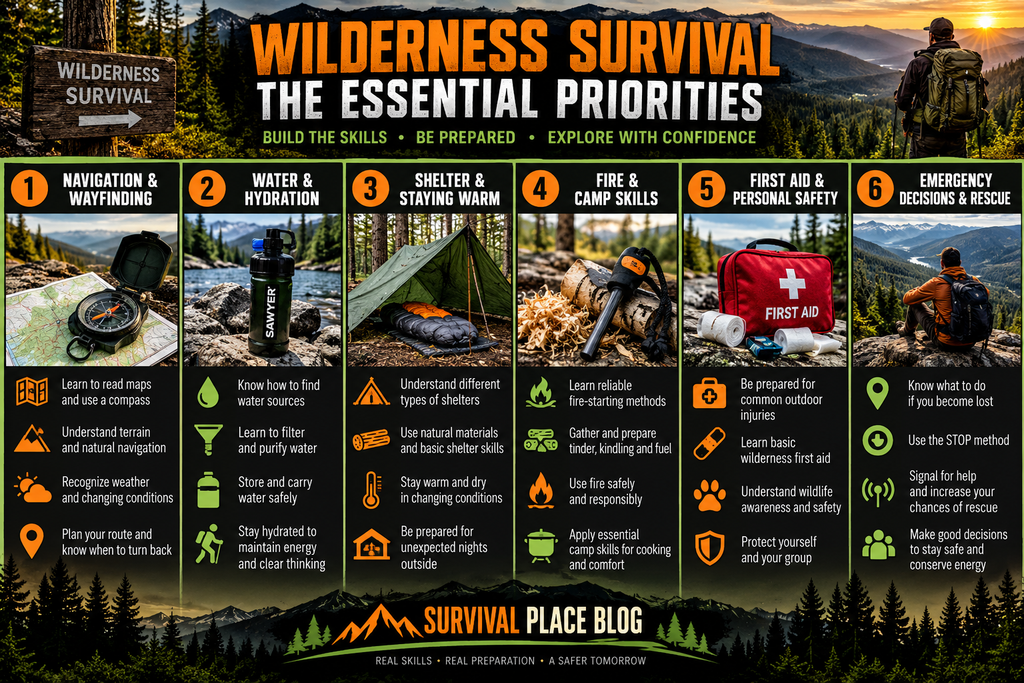
The 6 Essentials of Wilderness Survival Skills
Wilderness survival involves many different abilities, but beginners can start by understanding six essential areas.
You don’t need to master them all immediately. Build a foundation in each area, then practice and improve over time.
1. Navigation & Wayfinding
Knowing where you are, where you’re going, and how to return safely is one of the most valuable wilderness skills.
Before heading into the wilderness, review the National Park Service’s trip-planning recommendations to help prepare for changing conditions and unexpected situations.
Before heading out, study your route, identify landmarks, check trail conditions, and let someone know where you’re going and when you expect to return.
Learn to use a map and compass rather than depending entirely on a phone or GPS device.
For a closer look at finding your way outdoors, read Wilderness Navigation: How to Navigate Without GPS.
Beginner goal: Learn basic map and compass skills and plan a route you can follow safely.
2. Water & Hydration
Water is essential, but finding water outdoors doesn’t automatically mean it’s safe to drink.
Learn how to carry enough water for your trip, identify potential water sources, and understand the differences between filtering, boiling, and other treatment methods.
Water treatment methods have different limitations, so it’s important to understand what each method can and cannot remove.
Explore our guide, Wilderness Water: How to Find, Filter and Purify Water Safely.
Beginner goal: Carry sufficient drinking water and understand at least one appropriate backup treatment method.
3. Shelter & Staying Warm
Exposure to cold, wind, rain, or extreme heat can become dangerous even when you’re relatively close to civilization.
Learn how clothing, shelter, insulation, and site selection help protect you from environmental conditions.
An emergency shelter doesn’t always require building something from natural materials. Appropriate clothing, a tarp, an emergency bivy, or other equipment may provide a safer and faster solution.
For a more detailed introduction, see Emergency Outdoor Shelter: How to Choose, Build, and Survive the Night.
Beginner goal: Understand how to stay dry, reduce heat loss, and use a simple emergency shelter safely.
4. Fire & Camp Skills
Fire can provide warmth, a means of heating water, and an important morale boost in some circumstances. But it also creates risks, especially in dry conditions or where fires are restricted.
Learn safe fire-building principles, local fire regulations, and when using a stove or another alternative is more appropriate.
Practice camp organization, cooking safety, and responsible outdoor behavior.
Explore Wilderness Fire Starting: Methods, Tinder and Fire Safety for more detailed instruction.
Beginner goal: Understand safe fire practices, recognize when not to build a fire, and develop basic camp skills.
5. First Aid & Personal Safety
A small injury can become a serious problem when you’re far from immediate assistance.
Carry appropriate first-aid supplies, learn basic first-aid skills, and understand how to assess an injury and determine when outside help is needed.
Your preparation should also include weather awareness, suitable clothing, and realistic decisions about your physical abilities.
For further guidance, read Wilderness Fire Starting: Methods, Tinder and Fire Safety.
Beginner goal: Learn basic first aid, carry appropriate supplies, and recognize when an injury requires professional assistance.
6. Emergency Decisions & Getting Rescued
Sometimes the most important wilderness survival skill is knowing when to stop.
If you become lost or disoriented, continuing without a clear plan can make the situation worse. Stop, assess your surroundings, conserve energy, and consider the safest way to communicate your location or obtain help.
Knowing how to signal for rescue, share your location, and make decisions based on conditions can be more valuable than attempting complicated survival techniques.
Our guide, Lost in the Woods? How to Survive and Get Rescued, explores these decisions in greater detail.
Beginner goal: Understand what to do when you’re lost, how to signal for assistance, and when staying in place may be safer than continuing to travel.
You’ve Learned the Basics. What’s Next?
Understanding wilderness survival priorities is a starting point. The next step is to develop your abilities gradually, without taking unnecessary risks.
Start by Practicing at Home
Become familiar with the equipment you already own. Set up your tent, inspect your emergency supplies, learn to use your navigation tools, and practice simple outdoor skills in a safe environment.
For a structured starting point, follow How to Practice With Your Camping Gear at Home Before Your First Trip.
Move Into Familiar Outdoor Environments
Once you’re comfortable with your equipment, try a short day hike or an overnight trip at an established campground.
Choose manageable conditions, check the forecast, tell someone your plans, and give yourself plenty of time to return before dark.
Our guide, Camping for Beginners: How to Plan Your First Camping Trip, can help you prepare for that first experience.
Build Toward Realistic Outdoor Preparedness
As your experience grows, begin thinking through situations that could interrupt your plans.
What would you do if the weather changed unexpectedly? What if you couldn’t return before dark? What if someone in your group became injured?
Use the scenario guides in Level 4 — APPLY to understand the challenges and prepare appropriate responses.
You don’t need to experience an actual emergency to learn from realistic situations. Planning, discussion, and controlled practice can help you recognize problems before they become serious.
Wilderness Survival Is a Skill, Not Just Gear
You don’t need an expensive collection of survival equipment to begin learning wilderness survival skills.
Good preparation starts with understanding your environment, knowing your limits, carrying appropriate essentials, and making decisions that reduce unnecessary risks.
Equipment matters, but it works best when you know how and when to use it.
Start with the fundamentals. Learn one skill at a time. Practice safely. Build experience through manageable outdoor activities.
The goal isn’t to become fearless in the wilderness. It’s to become more capable, more observant, and better prepared for the unexpected.
Whenever you’re ready for the next step, return to the Wilderness Survival & Skills Hub and continue building your knowledge.