Could Your Household Handle 72 Hours Without Normal Services?
A 72-hour preparedness plan gives your household a practical starting point for handling unexpected emergencies. A power outage, severe storm, evacuation, water interruption, or other emergency can disrupt the services we depend on with little warning. The good news is that you don’t have to prepare for every possible disaster. You just need a solid starting point.
Your first preparedness goal is simple: Be able to take care of yourself and your household for at least 72 hours without relying on normal services.
That means having enough water, food, light, power, medications, basic first aid, sanitation supplies, information, and other essentials to get through those first three days safely.
Start with what you already have. Fill the gaps over time.
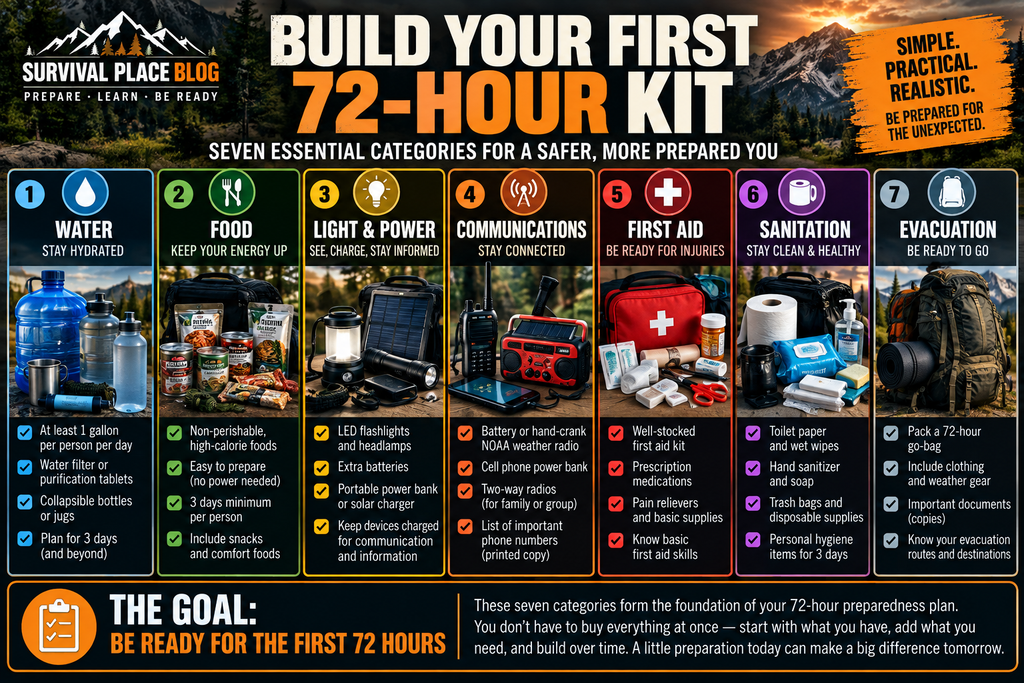
The seven essential categories of a 72-hour preparedness kit to help you stay safe, informed, and ready for the unexpected.
How to Use the Preparedness Hub
The Preparedness Hub is designed to help you build practical household readiness, whether you’re preparing for your first power outage or working toward greater long-term self-reliance.
We’ve organized the guides around four learning levels that take you from understanding everyday risks to preparing for real emergencies.
UNDERSTAND — Know What You’re Preparing For
Start by learning how emergencies can affect your household, which essential services may be disrupted, and why having a basic plan matters.
LEARN — Build Your Preparedness Knowledge
Explore practical guides covering water, food, backup power, emergency communications, first aid, sanitation, and other essential preparedness topics.
PRACTICE — Put Your Plans Into Action
Turn what you’ve learned into useful preparations. This 72-hour preparedness plan is a practical starting point for organizing supplies, identifying gaps, and testing your household’s readiness.
APPLY — Prepare for Real-World Emergencies
Use your knowledge and preparations to make informed decisions during situations such as extended power outages, severe storms, water interruptions, and evacuations.
You don’t have to follow these levels in a strict order. They’re a recommended learning path, not requirements. If you need help with a particular situation, go directly to the guide that addresses it.
As you work through the seven essentials below, use the related articles to explore each subject in greater detail. You can return to the Preparedness Hub whenever you’re ready to continue learning.
The 7 Essentials of a 72-Hour Preparedness Plan
You don’t need to build everything at once. Work through these seven areas one at a time. Once you have the basics covered, you can improve and expand your preparedness from there.
1. Water
Water should be one of your first preparedness priorities. A common starting point is to store at least one gallon of water per person per day for drinking and basic sanitation. For a 72-hour emergency, that means a minimum of three gallons per person.
Don’t rely on stored water alone. Have a backup way to make additional water safer to drink if your normal water supply becomes unavailable or contaminated.
Stored drinking water
Additional water for pets and special needs
Food-grade water containers
A reliable water filter or purification method
A way to carry water if you must leave home
72-hour goal: Have at least three days of immediately available water plus a backup method for treating additional water.
You don’t need special “survival food” to prepare for three days. Start with shelf-stable foods your household already eats and that require little or no refrigeration, water, or cooking.
Ready-to-eat canned foods
Shelf-stable meals and snacks
Protein-rich foods such as nut butters, canned meat, or beans
Foods appropriate for children, older adults, allergies, or special diets
A manual can opener
Disposable plates and utensils if water for washing dishes is limited
72-hour goal: Have enough familiar, shelf-stable food to feed everyone in your household for three full days without depending on refrigeration or your normal cooking equipment.
3. Light & Power
Power outages can quickly affect lighting, refrigeration, communications, internet access, medical equipment, and your ability to recharge essential devices. Start small and make sure you can safely light your home and keep critical electronics operating.
LED flashlights or lanterns
Spare batteries
Charged power banks
Charging cables for essential devices
A safe backup plan for longer outages
72-hour goal: Be able to safely light your living space and keep essential phones and small electronics operating through a three-day outage.
Never operate a generator, grill, camp stove, or other fuel-burning device inside your home, garage, or other enclosed space. Carbon monoxide can be deadly.
During an emergency, reliable information can be just as important as supplies. Cell service, internet access, and electricity may be disrupted, so have more than one way to receive emergency information and communicate with others.
Battery-powered or hand-crank emergency radio
Charged cell phones and power banks
Important phone numbers written on paper
Local emergency alert notifications enabled
A household communication and meeting plan
An out-of-area contact everyone knows how to reach
72-hour goal: Have at least two ways to receive emergency information and a simple plan for contacting or reconnecting with household members.
5. First Aid & Medications
Emergency services and pharmacies may be harder to reach during a major disruption. Keep basic first-aid supplies available and make sure essential personal medications and medical needs are part of your preparedness plan.
Basic first-aid kit
Essential prescription and over-the-counter medications
Copies of important medical information
Spare eyeglasses or contact-lens supplies if needed
Personal medical equipment and backup power when applicable
Basic first-aid knowledge
72-hour goal: Be prepared to handle minor injuries and maintain essential personal medical needs for at least three days.
6. Sanitation & Personal Needs
Emergencies can interrupt running water, sewer service, garbage collection, and access to stores. A few basic sanitation supplies can make an extended disruption considerably safer and more manageable.
Toilet paper and hygiene supplies
Soap and hand sanitizer
Heavy-duty trash bags
Disinfecting supplies
Feminine hygiene products and other personal necessities
Diapers, wipes, or other household-specific supplies if needed
A backup sanitation plan if toilets cannot be used
72-hour goal: Have what your household needs to maintain basic hygiene and safely manage sanitation if normal water or sewer services are interrupted.
7. Evacuation & Go-Bag
Most preparedness supplies can stay at home, but some emergencies require you to leave quickly. Have essential items organized so you aren’t trying to decide what to take while an evacuation is already underway.
Identification and copies of important documents
Essential medications
Water and portable food
Flashlight
Phone charger and power bank
Basic first-aid supplies
Appropriate clothing and footwear
Cash in small denominations
Necessary items for children, pets, or other household members
72-hour goal: Be able to leave home on short notice with the essentials needed to safely reach your destination and manage the first few days away from home.
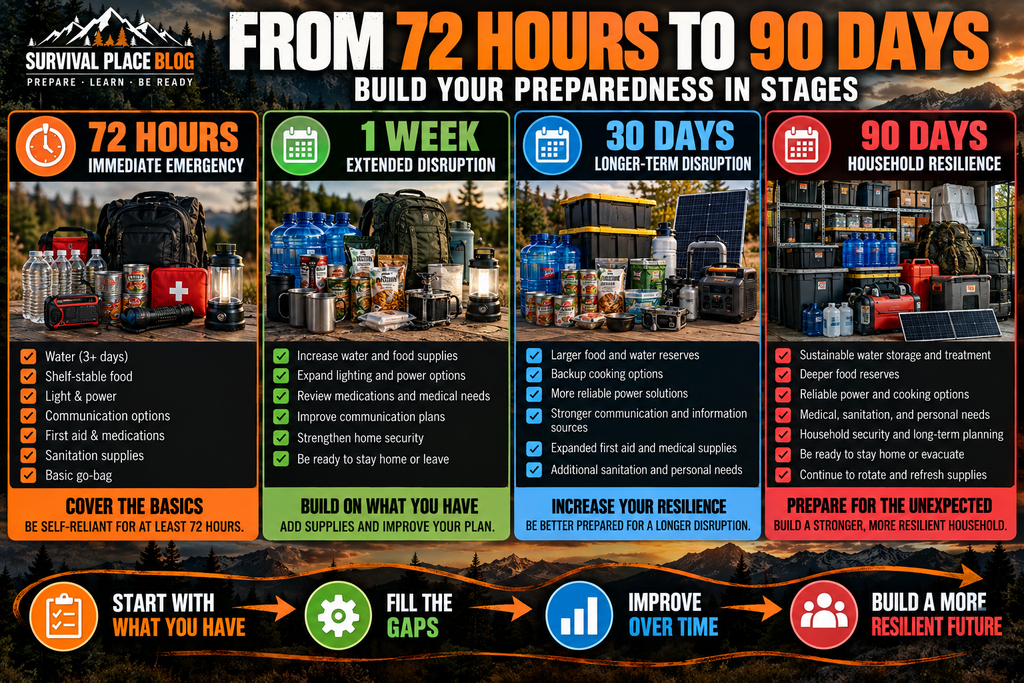
A practical progression from 72-hour preparedness to one week, 30 days, and 90 days of household resilience.
You’ve Covered the Basics. What’s Next?
Once your household can comfortably handle a 72-hour disruption, don’t stop there. Preparedness is best built in stages. Strengthen what you already have, then gradually extend how long you can remain self-reliant.
Build From 72 Hours to One Week
Your next goal is seven days. Increase your water and food supplies, expand backup power and lighting, review medications and sanitation needs, and make sure your household has a realistic plan for a longer disruption.
Build From One Week to 30 Days
Once a week feels manageable, begin thinking about longer disruptions. Focus on sustainable water storage and treatment, deeper food reserves, backup cooking, communications, household security, medical needs, and longer-term power options.
Build Toward 90 Days
Ninety days of preparedness doesn’t have to happen overnight. Build gradually, rotate what you store, buy supplies you’ll actually use, and focus on resilience rather than simply accumulating gear.
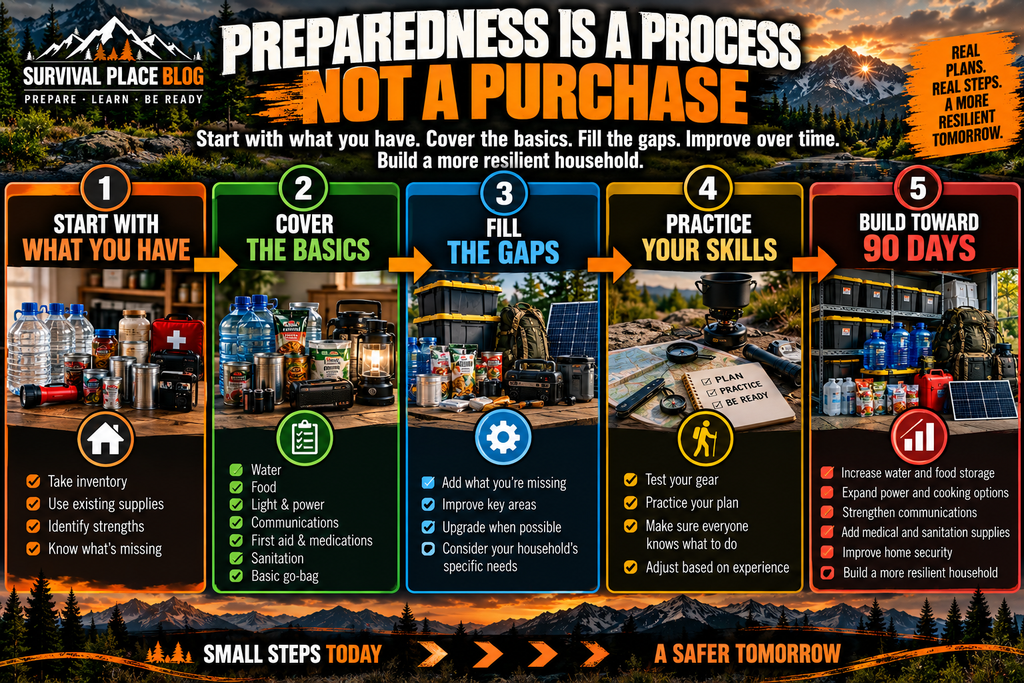
Preparedness is built over time: start with what you have, cover the basics, fill the gaps, and build toward greater household resilience.
Preparedness Is a Process, Not a Purchase
You don’t need every piece of survival gear on day one. Start with the risks most likely to affect your household, use what you already own, and improve your preparedness a little at a time.
The goal isn’t to live in fear of the next emergency. It’s to have a plan when something unexpected happens.