Affiliate Disclosure: This post contains affiliate links. If you purchase through these links, Survival Place Blog may earn a commission at no additional cost to you. As an Amazon Associate I earn from qualifying purchases.
Prepping for beginners doesn’t have to mean bunkers, years of freeze-dried food or preparing for the end of the world. For most people, preparedness is much simpler: having enough supplies, information and practical skills to handle an emergency without immediately depending on outside help.
A power outage that lasts several days, a winter storm that closes roads, a wildfire evacuation, contaminated drinking water or a temporary disruption to local stores can quickly expose gaps in an otherwise normal household.
Preparedness is about identifying those gaps before an emergency happens.
The goal isn’t fear.
It’s options.
What Is Prepping?
Prepping is the process of preparing yourself and your household to deal with emergencies that could interrupt the things you normally rely on.
That includes basics such as:
- Clean drinking water
- Food
- Shelter and warmth
- Medical supplies
- Lighting
- Communication
- Transportation
- Emergency information
- Personal safety
- Backup power
Some people prepare for hurricanes. Others focus on earthquakes, winter storms, wildfires, extended power outages or evacuation.
The specific risks may be different, but the basic preparedness principles are remarkably similar.
Good preparedness starts with the emergencies that are actually plausible where you live.
You don’t need to prepare for every imaginable disaster.
You need a solid foundation that works across many different situations.
Prepping Isn’t About Becoming a “Prepper”
One of the biggest obstacles for beginners is the stereotype surrounding preparedness.
You don’t need to label yourself a prepper.
You don’t need a bunker.
You don’t need a rural homestead.
And you certainly don’t need to buy everything at once.
A family that keeps emergency water, several days of food, flashlights, first-aid supplies and a plan for losing electricity is already practicing preparedness.
The same is true of someone who keeps emergency supplies in a vehicle or knows where to evacuate during a wildfire.
Practical preparedness is simply risk management for everyday life.
Start With the Most Likely Emergencies
Before buying equipment, think about what could realistically disrupt your household.
Depending on where you live, that might include:
- Power outages
- Severe thunderstorms
- Winter storms
- Flooding
- Wildfires
- Earthquakes
- Hurricanes
- Tornadoes
- Extreme heat
- Extreme cold
- Water-service interruptions
- Evacuations
- Temporary supply shortages
Then think about how those events would affect you.
What happens if the power is out for three days?
What happens if you can’t safely drink tap water?
What happens if stores are closed?
What happens if you need to leave home quickly?
Those questions are much more useful than trying to prepare for every worst-case scenario imaginable.
Build Your First 72 Hours
For someone new to preparedness, a three-day emergency supply is a practical starting point.
You are not trying to build a survival warehouse.
You’re trying to make sure your household can function through the first several days of an emergency.
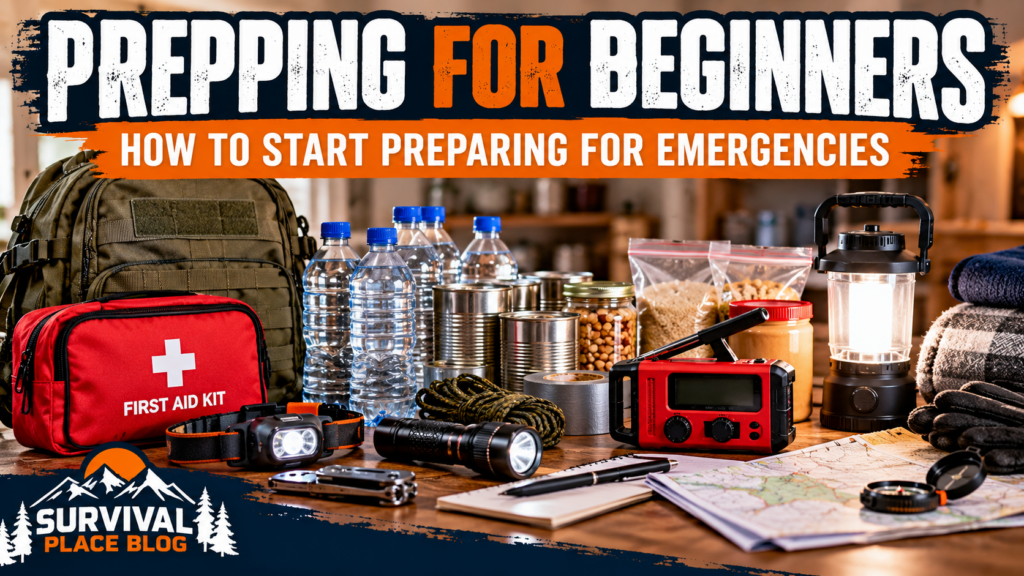
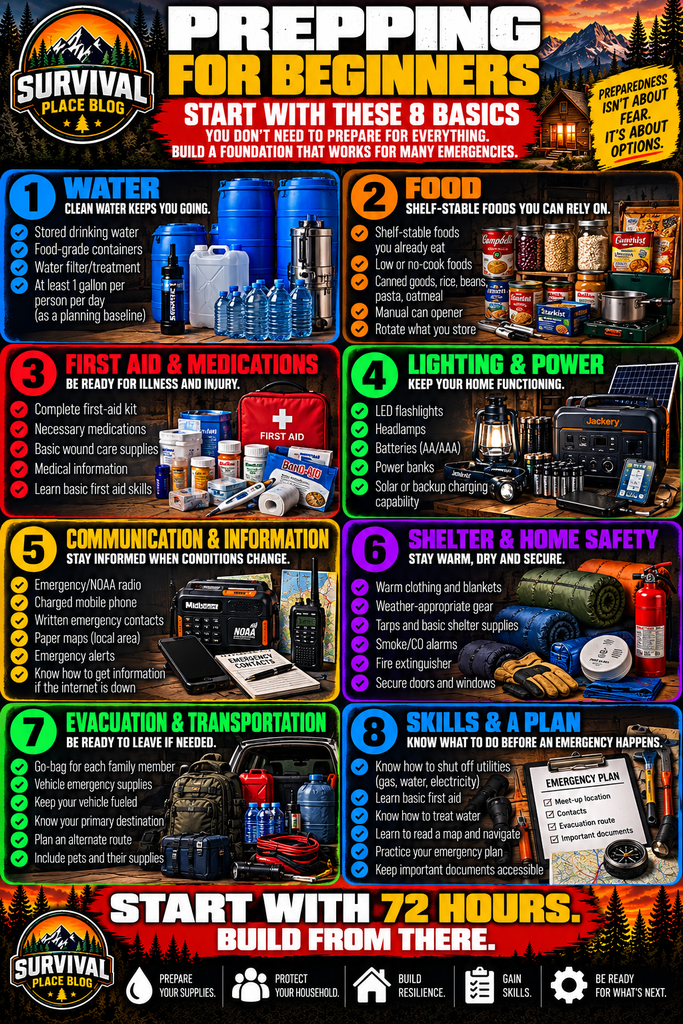
Start with:
- Water
- Shelf-stable food
- Necessary medications
- First-aid supplies
- Flashlights
- Batteries
- Emergency radio
- Hygiene supplies
- Warm clothing and blankets
- Phone charging
- Copies of important information
Once you have that foundation, you can gradually expand it.
Three days can become one week.
One week can become two weeks.
From there, households that want greater resilience can continue building supplies without making preparedness financially overwhelming.
Water Comes First
Water should be one of the first things you address.
A common emergency-planning guideline is to store at least one gallon of water per person per day for drinking and sanitation, while recognizing that individual needs and conditions can require more.
For a household of four, even a basic three-day supply adds up quickly.
That’s why a good water plan should include more than one layer.
Stored Water
Keep potable water specifically set aside for emergencies.
Rotate it when appropriate and store it away from chemicals, fuel and excessive heat.
Backup Water Storage
Having empty containers or emergency storage options gives you the ability to store additional water when there is advance warning of a storm or other disruption.
Water Treatment
A quality water filter or other appropriate treatment method provides another layer if your stored supply runs low.
No single water source should be your entire plan.
Stored water plus a reliable method of treating additional water gives you far more flexibility.
Build a Practical Emergency Food Supply
Emergency food doesn’t need to come in expensive survival buckets.
Start with foods your household already eats.
Useful options may include:
- Canned meat
- Canned vegetables
- Canned fruit
- Beans
- Rice
- Pasta
- Oatmeal
- Peanut butter
- Crackers
- Shelf-stable milk
- Dried fruit
- Nuts
- Ready-to-eat meals
The best emergency food is food you will actually eat and know how to prepare.
Remember that a power outage can affect refrigerators, freezers, electric stoves and other appliances.
Include foods that require little or no cooking.
And don’t forget a manual can opener.
As your food supply grows, rotating what you store becomes important. Use older items and replace them with newer ones instead of buying emergency food and forgetting about it for years.
Prepare for Power Outages
Power failures are among the most common emergencies many households will experience.
A short outage is inconvenient.
A multi-day outage can affect:
- Refrigeration
- Heating or cooling
- Lighting
- Cooking
- Communications
- Medical equipment
- Water systems
- Fuel availability
- Electronic payments
Every household should have multiple ways to produce light.
Flashlights and headlamps are generally more practical than relying entirely on candles.
A battery or hand-crank emergency radio can also provide information when internet or cellular service becomes unreliable.
Backup battery banks can keep phones and small electronics running, while larger portable power stations may support additional equipment depending on their capacity.
Don’t Ignore First Aid
Emergency preparedness isn’t only about food and water.
Injuries still happen during disasters, and professional medical care may take longer to reach you.
A household first-aid kit should match the number of people in your home and the activities you expect to encounter.
Common supplies include:
- Adhesive bandages
- Gauze
- Medical tape
- Antiseptic supplies
- Gloves
- Basic wound-care supplies
- Thermometer
- Over-the-counter medications appropriate for your household
Equipment is only part of the equation.
First-aid and CPR training can be far more valuable than owning a large medical kit you don’t know how to use.
Keep necessary prescription medications and medical information accessible, and account for household members with specific medical needs when building your emergency plan.
Have a Way to Communicate
During a widespread emergency, normal communication can become unreliable.
Cellular networks may be overloaded or unavailable, internet service may fail and household members may be separated.
Create a simple communication plan that includes:
- Important phone numbers
- An out-of-area contact
- Family meeting locations
- School and workplace information
- Evacuation destinations
- Emergency services information
Keep a paper copy.
If your contacts exist only inside your phone, losing the phone or its battery can mean losing the information with it.
Know When to Stay and When to Leave
Some emergencies are best handled at home.
Others require evacuation.
Your preparedness plan should account for both.
If you need to leave quickly, you shouldn’t be trying to assemble essential supplies while everyone else is doing the same thing.
A prepared go-bag can hold the basic equipment and documents you would want if you had to leave home with little warning.
Your vehicle is part of that plan too.
Try to avoid routinely running the fuel level extremely low, and keep basic emergency supplies in the vehicle.
Think About Home Safety
Preparedness also means making your home safer before anything happens.
That can include:
- Working smoke alarms
- Carbon monoxide alarms
- Fire extinguishers
- Strong exterior locks
- Exterior lighting
- Secure doors and windows
- Safe storage of emergency supplies
- Knowing how to shut off household utilities when appropriate
Security should begin with ordinary measures that make your home safer every day, not just during a disaster.
Build Skills Along With Supplies
One of the easiest prepping mistakes is focusing entirely on equipment.
Gear is useful.
Skills make the gear more useful.
Learn how to:
- Shut off household utilities when necessary
- Use a fire extinguisher
- Treat minor injuries
- Purify water
- Read a map
- Use a compass
- Cook without normal utilities
- Safely store food and water
- Make basic repairs
- Respond to local hazards
You don’t need to master everything at once.
Choose one skill, learn it and practice it.
Then add another.
Prepare for Your Actual Household
Generic emergency checklists are useful starting points, but your household may need things that aren’t on a standard list.
Think about:
- Babies and young children
- Older adults
- Pets
- Prescription medications
- Mobility limitations
- Medical equipment
- Allergies
- Dietary restrictions
- Climate
- Transportation
- Work and commuting distance
A good preparedness plan reflects the people who will actually use it.
Prepping for Beginners Doesn’t Have to Be Expensive
You don’t need to spend thousands of dollars to become better prepared.
Start by setting aside a small amount of money each month.
Add a few extra shelf-stable foods during normal grocery trips.
Buy water storage before expensive survival gadgets.
Build a basic first-aid kit.
Add flashlights and backup batteries.
Then continue filling the most important gaps.
Buying useful supplies gradually is usually easier on a household budget than panic-buying immediately before a storm.
Avoid the Gear Trap
Preparedness equipment can become addictive.
There is always another gadget, knife, radio, generator, pack or survival tool available.
Before buying something, ask:
What problem does this solve?
If you can’t answer that question, you may not need it.
Prioritize equipment that solves realistic problems and can be used across multiple emergencies.
Water containers are useful.
Flashlights are useful.
First-aid supplies are useful.
A way to receive emergency information is useful.
Build outward from those fundamentals.
Practice Your Emergency Plan
Supplies sitting in a closet aren’t a complete preparedness plan.
Test what you own.
Turn off the lights one evening and see whether your emergency lighting is adequate.
Cook a meal without using your normal stove.
Find your water supplies in the dark.
Make sure everyone knows where the first-aid kit is stored.
Practice your evacuation route.
Take your go-bag outside and carry it.
These simple exercises often reveal problems that aren’t obvious when you’re just looking at a checklist.
Expand Your Preparedness Gradually
Once you have the basics covered, you can begin preparing for longer disruptions.
That might mean expanding:
- Water storage
- Food reserves
- Backup power
- Cooking options
- Medical supplies
- Fuel
- Sanitation supplies
- Home security
- Vehicle preparedness
- Emergency communications
The goal isn’t to accumulate as much equipment as possible.
It’s to reduce the number of situations where a single failure leaves you without options.
Preparedness Is a Process
You never really finish preparing.
Supplies expire.
Families change.
People move.
Vehicles change.
New skills are learned.
Equipment improves.
Your emergency plan should evolve with your life.
Review your supplies periodically, replace expired items, test equipment and update important documents and contact information.
Start With One Weekend
If you’re completely new to prepping, don’t try to do everything today.
Use one weekend to establish the basics.
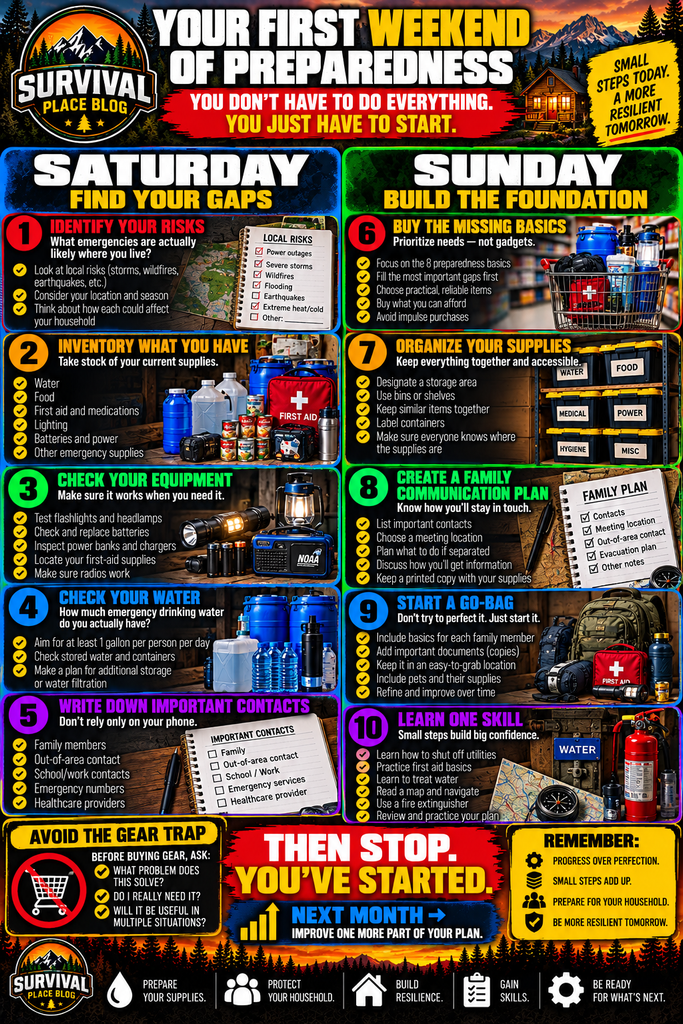
Day One
- Identify the emergencies most likely to affect your area
- Inventory the supplies you already own
- Check your flashlights and batteries
- Locate your first-aid supplies
- Determine how much emergency water you currently have
- Write down important phone numbers
Day Two
- Buy the most important missing basics
- Organize your emergency supplies in one accessible location
- Create a basic family communication plan
- Begin assembling a go-bag
- Choose one preparedness skill to learn
Then stop.
You have started.
Next month, improve another part of the plan.
Six months of steady progress can create a much stronger household preparedness system than one expensive shopping trip.
Final Thoughts
Prepping is not about predicting exactly what will happen next.
It’s about being able to handle disruptions when normal systems don’t work the way you expect.
Start with water, food, first aid, lighting, communication and a basic emergency plan. Prepare for the hazards most relevant to where you live. Build supplies gradually, learn useful skills and periodically test what you’ve put together.
You don’t need to become a survival expert overnight.
You simply need to be more prepared tomorrow than you are today.