Affiliate Disclosure: This post contains affiliate links. If you purchase through these links, Survival Place Blog may earn a commission at no additional cost to you. As an Amazon Associate I earn from qualifying purchases.
A 3 month survival plan sounds intimidating until you break it into manageable categories. You do not need a warehouse full of expensive survival gear. You need enough water, food, medical supplies, sanitation, lighting, backup power, and basic equipment to keep your household functioning when normal services are disrupted.
The goal is not to predict exactly what kind of emergency will happen. It is to build enough depth into your supplies that a short-term disruption does not immediately become a crisis.
Start With the People in Your Household
Before buying anything, determine exactly who you are preparing for.
Consider:
- Number of adults and children
- Pets
- Prescription medications
- Medical or mobility needs
- Dietary restrictions
- Climate and seasonal conditions
- Available storage space
- Cooking methods if utilities are unavailable
A three-month supply for one person looks very different from a three-month supply for a family of four.
Build around your actual household rather than somebody else’s survival checklist.
Water: Your First Priority
Water is one of the most important parts of any long-term emergency plan.
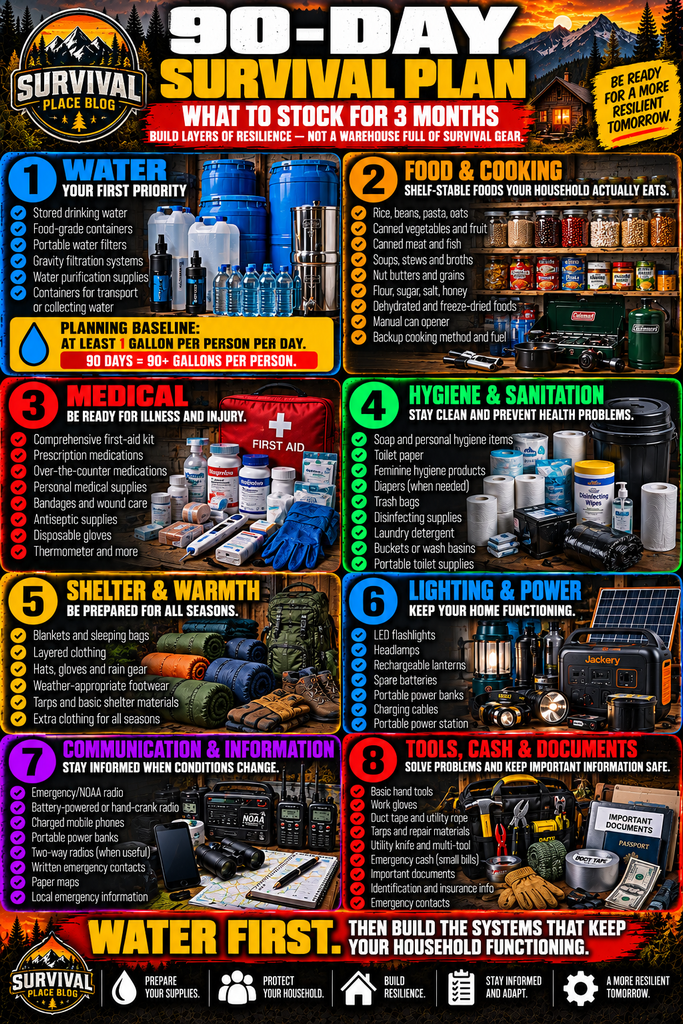
A commonly used emergency-planning baseline is at least one gallon of water per person per day for drinking and sanitation. Over 90 days, that would equal 90 gallons per person—and substantially more for an entire household.
Storing every gallon you could possibly need may not be practical, so use a layered water plan.
Consider having:
- Stored drinking water
- Food-grade water containers
- Portable water filters
- Larger gravity-fed filtration
- Water purification supplies
- Containers for collecting or transporting water
- Knowledge of nearby emergency water sources
Do not depend entirely on a single filter, container, or water source.
Food: Build a 90-Day Pantry You Will Actually Eat
A three-month food supply does not have to consist entirely of freeze-dried survival meals.
Start with shelf-stable foods your household already eats, then gradually increase the amount you keep on hand.
Useful staples can include:
- Rice
- Beans and lentils
- Pasta
- Oats
- Canned vegetables
- Canned fruit
- Canned meat and fish
- Soups and stews
- Nut butters
- Crackers
- Flour
- Sugar
- Salt
- Honey
- Powdered or shelf-stable milk
- Dehydrated foods
- Freeze-dried meals
Remember to include a manual can opener if canned food is part of your plan.
For a more in-depth look at preserving food for your emergency pantry, check out our guide, How to Dehydrate Food for Long-Term Storage: Complete Guide.
Rotate stored food into normal meals so your emergency pantry does not become a collection of forgotten cans and expired packages.
Cooking When the Power Is Out
Food storage is only half the equation. You also need a way to prepare it.
A basic backup cooking setup might include:
- Outdoor camp stove
- Appropriate fuel
- Pots and pans
- Cooking utensils
- Manual can opener
- Matches or other ignition methods stored safely
- Simple foods requiring minimal cooking
Never use outdoor grills, camp stoves, or generators inside your home, garage, or other enclosed spaces where carbon monoxide can accumulate.
Shelter, Clothing and Warmth
Most emergencies will not require abandoning your home. In many situations, your house itself is your primary shelter.
Prepare it accordingly.
Keep seasonal supplies such as:
- Warm blankets
- Sleeping bags
- Layered clothing
- Hats and gloves
- Rain gear
- Tarps
- Basic shelter materials
- Weather-appropriate footwear
If evacuation becomes necessary, having portable shelter equipment becomes much more important.
Medical and First-Aid Supplies
A three-month plan should go beyond a handful of adhesive bandages.
Your medical supplies should reflect the people in your household and your ability to use the equipment safely.
Consider:
- Comprehensive first-aid kit
- Bandages and gauze
- Antiseptic supplies
- Disposable gloves
- Basic wound-care supplies
- Thermometer
- Over-the-counter medications your household normally uses
- Personal medical supplies
- Prescription medications when available and appropriate
A comprehensive first-aid kit gives you a solid base of supplies that you can customize around your household’s specific medical needs.
Check medications and medical supplies regularly for expiration dates and changing household needs.
Hygiene and Sanitation
Sanitation becomes increasingly important as an emergency stretches from days into weeks.
Stock enough everyday hygiene products to avoid creating unnecessary health problems.
Consider:
- Soap
- Toothpaste and toothbrushes
- Toilet paper
- Feminine hygiene products
- Diapers when needed
- Trash bags
- Disinfecting supplies
- Laundry detergent
- Buckets or wash basins
- Portable toilet supplies
Think ahead about what you would do if water service or your normal toilet became unavailable.
Lighting and Backup Power
A prolonged outage becomes much easier to manage when you can safely light your home and keep essential electronics operating.
Useful equipment includes:
- LED flashlights
- Headlamps
- Rechargeable lanterns
- Spare batteries
- Portable power banks
- Charging cables
- Portable power station when appropriate
Avoid depending on open flames for routine emergency lighting. Battery-powered LED lighting is generally a much safer option inside the home.
Communication
During a major emergency, information can change quickly.
Have more than one way to receive updates.
Consider keeping:
- Battery-powered or hand-crank emergency radio
- NOAA weather radio capability
- Charged mobile phones
- Portable power banks
- Two-way radios when useful
- Written emergency contacts
- Local emergency information
- Paper maps
Do not assume cellular service or internet access will always be available.
Tools, Repairs and Personal Safety
You do not need an entire workshop, but basic tools can solve a surprising number of problems during an extended disruption.
Useful items include:
- Multi-tool
- Adjustable wrench
- Screwdrivers
- Pliers
- Hammer
- Duct tape
- Work gloves
- Paracord or utility rope
- Tarps
- Utility knife
- Basic repair materials
Personal safety planning should reflect your household, local laws, surroundings, and comfort level. Good exterior lighting, secure doors and windows, situational awareness, communication with trusted neighbors, and avoiding unnecessary confrontations are all practical parts of preparedness.
Cash and Important Documents
Electronic payment systems may not always be available during widespread outages or communications failures.
Keep a reasonable amount of emergency cash in a secure location, preferably including smaller bills.
Protect copies of important documents such as:
- Identification
- Insurance information
- Medical information
- Emergency contacts
- Property information
- Important account numbers
Store physical copies in a protected location and consider secure backups where appropriate.
Don’t Forget the Small Things
Some of the most frustrating shortages during an emergency are inexpensive everyday items.
Think about:
- Batteries
- Garbage bags
- Pet food
- Prescription refills
- Cleaning supplies
- Spare glasses
- Chargers
- Can openers
- Work gloves
- Paper and pens
- Books, cards or games
Preparedness is not only about staying alive. Maintaining routines, cleanliness, communication, and morale matters during a long disruption.
Build Your 3-Month Survival Plan Gradually
You do not need to purchase 90 days of supplies this weekend.
Start with what you already have.
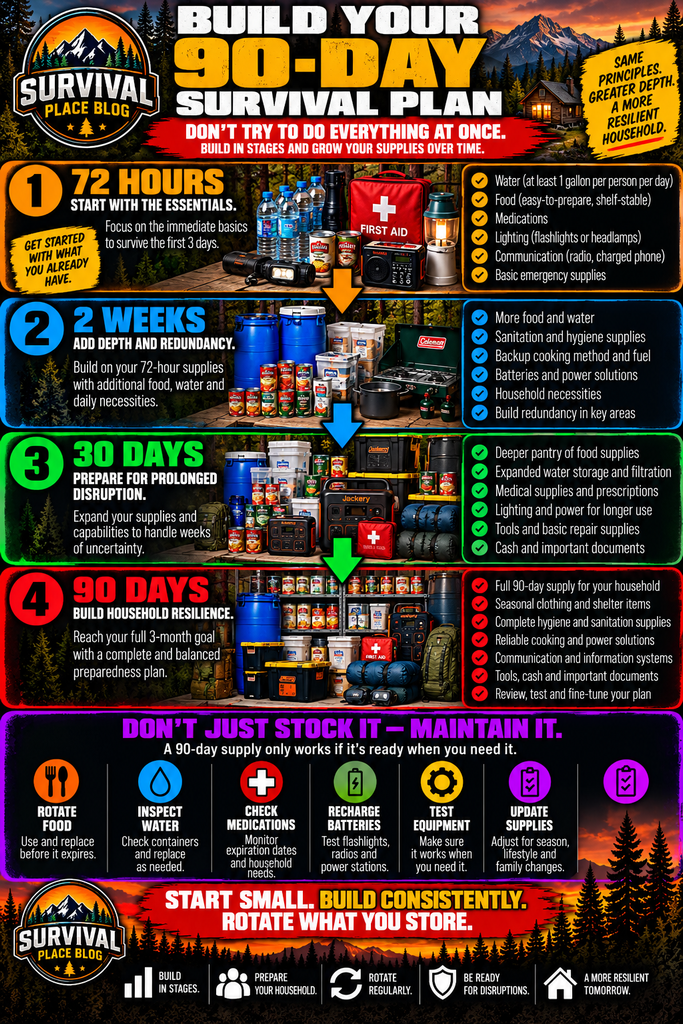
Then build in stages:
First: Prepare for 72 hours.
Next: Expand to two weeks.
Then: Build toward 30 days.
Finally: Work toward a full 90-day supply.
This approach spreads out the cost, gives you time to learn what your household actually uses, and makes rotating food and supplies much easier.
Review Your Supplies Regularly
A three-month stockpile is not something you build once and forget.
Every few months:
- Check expiration dates
- Rotate food
- Inspect stored water
- Recharge batteries and power stations
- Test flashlights and radios
- Review medications
- Replace damaged equipment
- Update household needs
Your plan should change as your family, location, budget, and circumstances change.
Final Thoughts
A practical 3 month survival plan is less about accumulating survival gear and more about creating layers of resilience.
Water comes first. Then food, medical needs, sanitation, shelter, lighting, communication, and the equipment necessary to keep those systems working.
Build gradually, rotate what you store, and concentrate on supplies you understand and will actually use.
The objective is simple: if normal services disappear for days or weeks, your household has enough resources and options to manage the disruption safely.