Affiliate Disclosure: This post contains affiliate links. If you purchase through these links, Survival Place Blog may earn a commission at no additional cost to you. As an Amazon Associate I earn from qualifying purchases.
Your first camping trip doesn’t have to begin at a crowded campground or deep in the wilderness. Sometimes, the best place to learn how to spend a night outdoors is just a few steps from your back door.
Backyard camping for beginners offers a practical way to experience sleeping outside, managing camping equipment after dark, and discovering what you actually need to stay comfortable overnight. You get the experience of camping while keeping your home nearby if something goes wrong.
A backyard overnight adventure can also reveal problems that are easy to overlook when practicing during the day. A sleeping pad might feel comfortable for ten minutes but become uncomfortable after several hours. A tent may be easy to enter in daylight but difficult to navigate in the dark. Even ordinary nighttime sounds can feel unfamiliar when you’re sleeping outdoors for the first time.
That’s exactly why a practice night is valuable.
In this guide, we’ll walk through planning your first backyard camping experience, preparing for darkness, staying comfortable, handling common problems, and learning from the experience before moving on to a real campground.
1. Why Backyard Camping Is Useful Preparation
There’s a difference between knowing how camping equipment works and spending an entire night using it.
You may already know how to pitch your tent, inflate a sleeping pad, and organize your equipment. But your first overnight experience introduces additional challenges that don’t always appear during a daytime practice session.
These include:
- Finding a comfortable sleeping position on the ground.
- Adjusting to outdoor temperatures after sunset.
- Moving safely around a campsite in darkness.
- Managing condensation and damp equipment.
- Keeping track of essential supplies overnight.
- Responding calmly to unfamiliar sounds.
- Getting up during the night without disturbing everyone.
- Breaking down camp after a full night’s use.
A backyard practice trip gives you an opportunity to identify these issues without the pressure of being miles from home.
It also helps build confidence.
Instead of worrying about everything that might happen during a campground trip, you can focus on developing one skill at a time.
Build on Your Previous Equipment Practice
Before attempting your first overnight experience, you should already be reasonably comfortable setting up your tent and using your basic camping equipment.
If you haven’t completed that preparation, start with our guide, How to Practice With Your Camping Gear at Home Before Your First Trip, which covers inspecting equipment, practicing tent setup, testing sleeping gear, and organizing camping supplies.
The goal of this second exercise isn’t to repeat every equipment demonstration. It’s to find out how well your preparation works during a real night outdoors.
Set Realistic Expectations
Your first backyard camping experience doesn’t need to be perfect.
You might sleep poorly, discover that your pillow isn’t comfortable, or realize you forgot an important item. Those experiences aren’t necessarily failures.
They’re useful information.
The purpose is to learn what works, identify what needs improvement, and make your next outdoor experience easier.
2. Choose a Safe Backyard Location and Check the Weather
The location of your tent can make a surprising difference in comfort and safety.
Even though you’re camping at home, take a few minutes to evaluate the area before setting up.
Choose a Suitable Tent Location
Look for a reasonably level area with firm ground and enough space for your tent, guy lines, and safe movement around the campsite.
Avoid:
- Low spots where rainwater collects.
- Areas beneath dead branches or visibly damaged trees.
- Steep slopes or uneven ground.
- Sprinklers and automatic irrigation systems.
- Ant nests, wasp activity, or other obvious insect hazards.
- Areas near fire pits, grills, or other heat sources.
- Locations where guy lines could create hazards along frequently used walkways.
Check for sharp stones, sticks, pet waste, and anything that could damage your tent floor.
If you have children participating, choose a location where they can be appropriately supervised throughout the evening and overnight.
Check the Forecast Before Setting Up
A backyard is a convenient place to practice, but that doesn’t mean severe weather should be treated casually.
For your first overnight experience, choose a night with mild temperatures, manageable wind, and little chance of significant rain.
Check the forecast for:
- Overnight low temperatures.
- Rain and thunderstorm potential.
- Wind speeds and gusts.
- Local weather alerts.
- Any unusually hot or cold conditions.
The National Weather Service emphasizes that tents do not provide protection from lightning. If thunderstorms threaten, move into your home or another substantial enclosed building rather than remaining inside the tent.
Safety rule: Postpone your backyard camping practice if thunderstorms, dangerous winds, extreme temperatures, or other hazardous weather are expected. If thunder develops during the night, go indoors immediately.
Have a Simple Exit Plan
One advantage of backyard camping is having your home nearby.
Before bedtime, make sure everyone knows:
- How to leave the tent safely.
- Where the nearest house entrance is located.
- How to turn on a flashlight or headlamp.
- When to go indoors rather than trying to continue the exercise.
There’s no benefit in forcing yourself to remain outside when conditions become unsafe.
3. Set Up Your Tent and Sleeping System for the Night
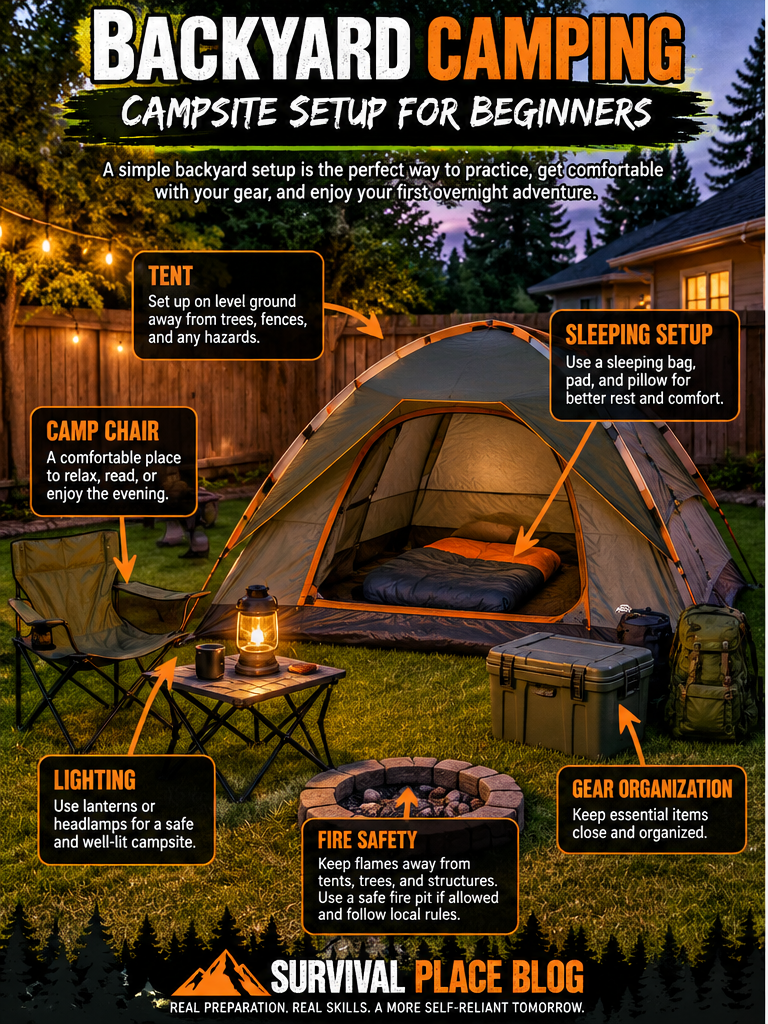
Now that you’ve chosen a safe location, it’s time to prepare your sleeping area.
Try to complete most of your setup while there’s still plenty of daylight.
You should already know the basic tent assembly process from your earlier equipment practice. For this overnight exercise, concentrate on positioning and comfort rather than rushing through the setup.
Prepare the Tent
Before moving sleeping equipment inside:
- Make sure the tent is properly pitched and stable.
- Confirm the rainfly is installed correctly if conditions call for it.
- Check that stakes and guy lines are secure.
- Keep ventilation openings configured for the weather.
- Test the door zippers.
- Inspect the floor for moisture or sharp objects.
Avoid placing equipment against the tent walls where it could interfere with ventilation or encourage moisture transfer.
Build a Comfortable Sleeping Area
Your sleeping system should include three basic components:
Sleeping pad: Provides cushioning and insulation from the ground.
Sleeping bag or suitable bedding: Helps maintain comfort during the expected overnight temperature.
Pillow or head support: Keeps your sleeping position more comfortable.
A sleeping pad is particularly important because the ground can draw heat away from your body even when the air feels relatively mild.
For beginners, a self-inflating pad or insulated inflatable sleeping pad may be more comfortable than sleeping directly on a thin blanket.
A sleeping bag should also be appropriate for the expected overnight low. Manufacturer temperature ratings vary in meaning, so don’t assume a bag’s lowest advertised number represents a comfortable sleeping temperature.
For a practical beginner option, the MalloMe Sleeping Bags for Adults Cold Weather & Warm can be considered for suitable mild-weather camping conditions, provided the specific model’s rating matches your needs.
Test Your Sleeping Arrangement Before Dark
Lie down inside your tent for several minutes.
Ask yourself:
- Is the ground level enough?
- Can you stretch out comfortably?
- Does your sleeping pad stay in position?
- Is there enough room for everyone?
- Can you reach the tent door without climbing over equipment?
- Are your shoes and flashlight easy to locate?
Make adjustments now rather than discovering problems after midnight.
4. Organize Essential Overnight Supplies
Once your sleeping area is ready, organize the supplies you’ll need between sunset and morning.
The key is to keep essential items accessible without filling the tent with unnecessary equipment.
What Should Stay Within Reach?
Keep a small overnight essentials bag or organizer near your sleeping area.
Consider including:
- Headlamp or flashlight.
- Spare batteries or charged backup light.
- Phone with sufficient battery power.
- Water bottle with a secure lid.
- Personal medications.
- Eyeglasses, if needed.
- Extra socks or a warm layer.
- Tissues.
- Small first-aid kit.
- Any other essential personal items.
Store these supplies in a predictable location so you can find them without searching in the dark.
Avoid keeping food, food wrappers, or other scented attractants in your tent. Store them securely indoors when your evening meal is finished.
Keep the Tent Floor Organized
A cluttered tent becomes frustrating at night.
Place shoes near the entrance where they won’t block the exit. Keep backpacks away from sleeping areas and avoid leaving loose items where someone might step on them.
For families, give each person a designated location for personal belongings.
This simple habit can prevent misplaced equipment and reduce unnecessary nighttime disruptions.
Practice Using Only What You Packed
One useful backyard camping exercise is to avoid repeatedly going indoors for forgotten supplies.
Before sunset, pack the items you believe you’ll need for the night.
If you forget something nonessential, write it down and decide whether you can manage without it.
However, never withhold medication, drinking water, necessary clothing, or other safety-related items simply to make the exercise more realistic.
For a broader equipment reference, review our Essential Camping Checklist: Everything You Need for a Safe and Comfortable Trip before your next outdoor adventure.
5. Prepare for Darkness and Establish a Nighttime Routine
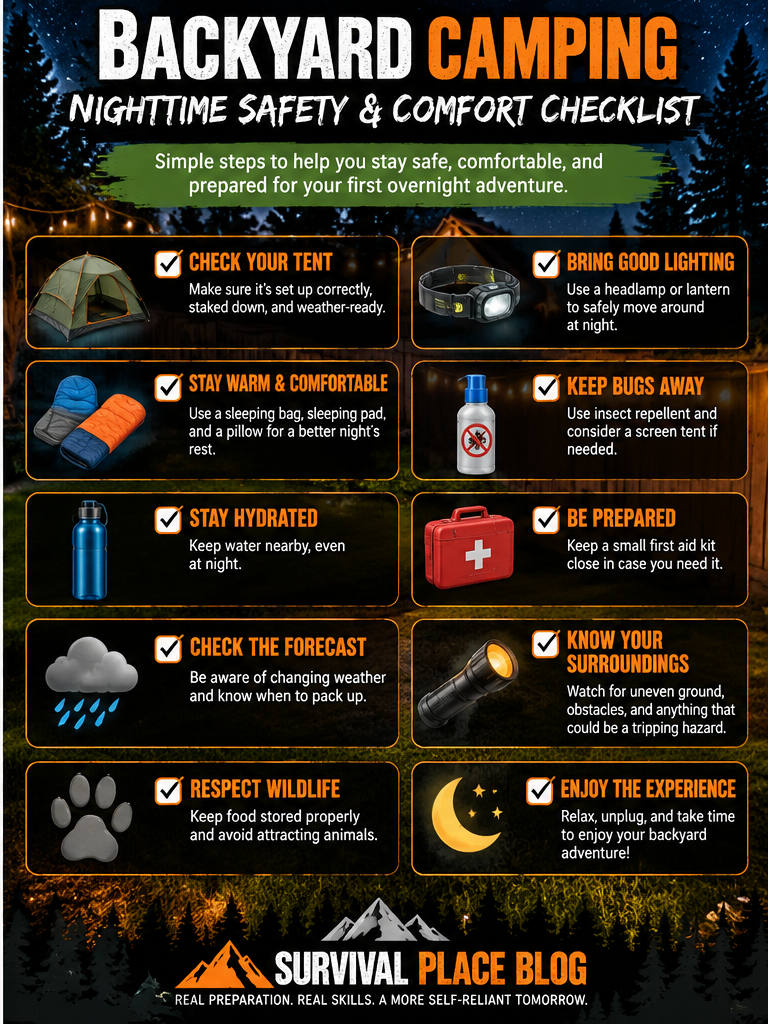
One of the biggest adjustments for first-time campers is how quickly familiar surroundings can feel different after sunset.
The yard you’ve walked through hundreds of times may suddenly seem unfamiliar when visibility drops.
This is normal, and a little preparation makes the transition easier.
Complete Important Tasks Before Sunset
Before it gets dark:
- Finish setting up the sleeping area.
- Organize personal supplies.
- Eat dinner and clean up.
- Use the bathroom.
- Put on appropriate evening clothing.
- Check tent ventilation.
- Confirm lighting equipment works.
- Walk the route between the tent and your home.
The more organized you are before sunset, the less you’ll need to manage in darkness.
Establish a Simple Evening Schedule
You don’t need a strict timetable, but having a general routine can make your first overnight experience more comfortable.
For example:
Early evening: Finish setup, prepare dinner, and organize supplies.
Around sunset: Check lighting, put on warmer clothing if needed, and secure food.
After dark: Spend time sitting quietly outdoors and becoming familiar with nighttime conditions.
Bedtime: Use the bathroom, arrange your sleeping system, and place essential items within reach.
Morning: Inspect your equipment, eat breakfast, and break down camp.
Keep the Experience Relaxed
Your first backyard camping night should feel like an opportunity to learn, not a test you have to pass.
Read a book, observe the stars if conditions allow, or simply listen to the outdoor environment.
If you’re camping with children, keep the experience age-appropriate and maintain suitable supervision.
A positive first experience is more valuable than trying to recreate every challenge of wilderness camping.
6. Manage Temperature, Condensation, and Overnight Comfort
Comfort often changes significantly between the time you enter your tent and the time you wake up.
Evenings can start warm and become noticeably cooler after midnight.
Moisture can also accumulate inside a tent, especially when ventilation is limited.
Understanding these changes is an important part of learning to camp comfortably.
Prepare for Overnight Temperature Changes
Check the expected low temperature before bedtime.
Keep an appropriate insulating layer available and change out of damp clothing before entering your sleeping bag.
Consider wearing:
- Dry socks.
- Comfortable sleep clothing.
- A lightweight insulating layer when needed.
- A warm hat in appropriately cool conditions.
Avoid overdressing to the point of sweating, since damp clothing can make you colder later.
If temperatures become unsafe for your equipment, health, or experience level, go indoors.
Understand Tent Condensation
Condensation occurs when moisture in the air collects on cooler surfaces.
Inside a tent, moisture can come from breathing, damp clothing, wet gear, and humid outdoor conditions.
You might notice:
- Small droplets on the inside of the rainfly.
- Damp tent walls.
- Moisture near the tent ceiling.
- Slightly damp equipment in the morning.
Condensation doesn’t automatically mean your tent is leaking.
Reduce Moisture Inside the Tent
To help manage condensation:
- Use the tent’s ventilation features appropriately.
- Keep wet clothing and shoes out of the sleeping area when practical.
- Avoid blocking vents with backpacks or bedding.
- Maintain separation between the inner tent and rainfly where the design requires it.
- Avoid bringing unnecessary damp equipment inside.
Never use a fuel-burning heater, lantern, stove, or other combustion device inside a tent to warm or dry the interior. These devices create serious fire and carbon monoxide hazards.
Evaluate Your Sleeping Comfort
If you wake up repeatedly because your back hurts, the ground feels cold, or your sleeping bag is too restrictive, make a note of it.
You may need a different sleeping pad, better insulation, or a revised sleeping arrangement.
A backyard test is the ideal time to discover these problems.
7. Practice Using Flashlights and Headlamps After Dark
Lighting is one of the most important tools you’ll use during an overnight camping experience.
A flashlight that seems bright and convenient indoors may behave differently when you’re trying to find shoes, open a tent zipper, or move across uneven ground.
Practice Three Simple Lighting Tasks
After sunset, try the following exercises.
Exercise 1: Find your equipment.
Sit inside your tent with your light switched off.
Turn on your headlamp or flashlight and locate your shoes, water bottle, and overnight essentials bag.
Exercise 2: Exit the tent safely.
Practice opening the door, stepping outside, and moving away from the tent without tripping over stakes or guy lines.
Exercise 3: Walk to your home.
Use your light to follow the route you identified earlier.
Watch where you place your feet and avoid shining bright lights directly into other people’s eyes.
Headlamp or Flashlight?
Both can be useful.
A handheld flashlight provides directed lighting and is easy to pass between people.
A headlamp leaves your hands free for opening zippers, carrying supplies, or performing simple tasks.
For beginners, a dependable LED headlamp is often a practical choice.
The Energizer Universal LED Headlamp is one example of a compact lighting option worth considering for nighttime camping tasks.
The National Park Service includes illumination among its Ten Essentials, emphasizing the usefulness of flashlights and headlamps during outdoor activities.
Keep Backup Lighting Available
Don’t rely on a single light source.
Have a backup flashlight or headlamp available, along with appropriate spare batteries or another dependable power source.
Check battery levels before sunset rather than discovering a problem after your primary light stops working.
8. Practice Safe Food Preparation and Storage
Food preparation is part of many camping experiences, but your first backyard overnight doesn’t need an elaborate outdoor kitchen.
The purpose is to practice organizing meals, cleaning up, and storing food responsibly.
Start With a Simple Meal
For your first practice night, choose something easy to prepare.
Options might include:
- Sandwiches and fruit.
- A prepared meal brought outside.
- Shelf-stable snacks that don’t require cooking.
- A simple meal prepared in your household kitchen.
If you want to practice using a camping stove, do so only outdoors in an appropriate, well-ventilated location, following the manufacturer’s instructions and applicable local fire restrictions.
Keep fuel-burning equipment away from tents, combustible materials, and children.
Never operate a camping stove, grill, heater, or fuel-burning lantern inside a tent, garage, vehicle, or other enclosed space.
Practice a Realistic Cleanup Routine
After eating:
- Collect food wrappers and scraps.
- Wash or properly contain dirty utensils.
- Secure remaining food.
- Dispose of trash appropriately.
- Wipe down your eating area.
- Check the ground for dropped food.
These habits become especially important at campgrounds where wildlife may be attracted to improperly stored food.
The National Park Service provides practical guidance on campsite cooking, cleanliness, and preventing wildlife from accessing food.
Store Food Securely Overnight
For a backyard exercise, the simplest solution is usually to store food, trash, and scented supplies securely inside your home.
Do not leave food or wrappers in your tent overnight.
At established campgrounds, follow the site’s specific food-storage rules, including any requirements for bear-resistant lockers or containers.
Practicing clean food storage at home helps establish habits that matter much more when you’re camping around wildlife.
9. Understand Nighttime Sounds Without Unnecessary Fear
The first night outside can feel surprisingly different from sleeping inside a house.
You may hear sounds you normally overlook, including wind moving through leaves, insects, neighborhood animals, distant traffic, or branches shifting.
When you can’t immediately see what’s making a sound, your imagination may fill in the gaps.
That doesn’t mean every noise represents a threat.
Learn to Recognize Familiar Sounds
Spend a few minutes sitting quietly outside before bedtime.
Listen for:
- Wind moving through trees.
- Crickets and other insects.
- Birds settling for the night.
- Dogs barking in the distance.
- Small animals moving through vegetation.
- Ordinary neighborhood activity.
You may discover that many sounds become less distracting once you understand their likely sources.
Avoid Investigating Every Noise
You don’t need to leave the tent every time you hear something.
If a sound appears harmless, remain calm and continue resting.
However, don’t dismiss clear signs of danger. If you hear a person approaching unexpectedly, notice threatening animal activity, smell smoke, or have another genuine safety concern, use your judgment and move indoors or seek help as appropriate.
For children, explain beforehand that outdoor sounds are normal while making it clear they should tell an adult whenever they feel unsafe.
Build Confidence Through Familiarity
One of the most useful lessons from backyard camping is learning how your surroundings change at night.
The more familiar you become with normal outdoor conditions, the easier it may be to remain calm during future camping experiences.
This confidence should come from preparation and observation, not from ignoring real hazards.
10. Handle Minor Problems Without Becoming Frustrated
Even a carefully planned practice night can produce unexpected problems.
A tent zipper might snag. A sleeping pad could lose air. Your flashlight might stop working, or you may discover that the ground is less comfortable than expected.
These situations provide opportunities to practice basic problem-solving.
Problem: Your Sleeping Pad Loses Air
First, check the valve.
If the valve is secure but the pad continues losing air, inspect it for damage using the manufacturer’s recommended procedure.
If necessary, use an appropriate repair kit.
If you can’t restore adequate insulation and comfort, switch to a safe backup sleeping arrangement or go indoors.
Problem: Your Sleeping Bag Isn’t Warm Enough
Check whether your clothing is dry and whether your sleeping pad provides adequate insulation.
Add suitable dry layers or additional appropriate insulation if available.
If you remain cold or begin experiencing concerning symptoms, stop the exercise and go inside.
Never attempt to warm a tent with a stove, heater, charcoal, or other fuel-burning device.
Problem: Your Tent Becomes Damp
Check ventilation and look for possible rainwater entry.
Make sure the rainfly is properly positioned and that wet equipment isn’t pressed against the inner tent.
If your bedding becomes wet and you can’t remain safely warm and dry, move indoors.
Problem: Your Light Stops Working
Switch to your backup light.
Check the batteries or charging connection during daylight the next morning.
Make a note to inspect all lighting equipment before future trips.
Problem: You Can’t Sleep
Sleeping outdoors for the first time may feel unfamiliar.
Try adjusting your pillow, sleeping position, or clothing.
Avoid repeatedly checking the time or becoming frustrated because you’re not falling asleep immediately.
If you’re genuinely uncomfortable or unable to rest, it’s fine to finish the night indoors.
Know When to Stop the Exercise
Backyard camping is about learning, not proving endurance.
End the exercise if conditions become hazardous, essential equipment fails, or someone becomes ill, frightened, or excessively uncomfortable.
If you ever face a situation where your primary shelter becomes unusable, understanding alternative shelter principles is valuable. Our guide, Emergency Outdoor Shelter: How to Choose, Build, and Survive the Night, explores those concepts in more detail.
11. Morning Breakdown, Equipment Inspection, and Cleanup
The morning after your backyard camping experience is just as important as the night itself.
This is your opportunity to inspect equipment after actual use and develop good campsite cleanup habits.
Start With a Quick Equipment Check
Before packing everything away, look for:
- Condensation inside the tent.
- Damp sleeping bags or pads.
- Loose tent stakes.
- Damaged poles or guy lines.
- Dirt or debris inside the tent.
- Missing or misplaced supplies.
- Equipment that didn’t perform as expected.
Write down any problems while they’re still fresh in your memory.
Dry Equipment Before Storage
If your tent, sleeping bag, or other fabric equipment is damp, allow it to dry thoroughly according to the manufacturer’s instructions before long-term storage.
Packing damp equipment away can encourage mildew and unpleasant odors.
Shake debris out of your tent and inspect the floor before folding it.
Avoid forcing poles, zippers, or fabric into storage bags.
Practice Leaving a Clean Campsite
Even though you’re camping at home, treat your backyard as if it were an actual campsite.
Pick up all trash, food scraps, packaging, and loose equipment.
Remove tent stakes and inspect the area for forgotten items.
If you used a temporary cooking area, make sure everything is clean and properly stored.
The goal is to develop habits you’ll carry into campgrounds and natural areas.
Repack With Your Next Trip in Mind
Instead of placing everything randomly into storage, group related supplies together.
Keep sleeping equipment, lighting, shelter accessories, and cooking supplies organized.
This makes it easier to identify missing items and prepare for your next camping trip.
12. Review What You Learned Before Visiting a Campground
Your backyard overnight experience isn’t complete until you’ve taken a few minutes to evaluate it.
You don’t need a complicated report. A short list of observations can help you make better decisions before your first campground trip.
Ask Yourself These Questions
Sleeping comfort
- Did I stay warm enough?
- Was my sleeping pad comfortable?
- Did I have enough room inside the tent?
Equipment
- Did everything work as expected?
- Which items were difficult to use?
- Did I forget anything important?
Nighttime routines
- Could I find my flashlight easily?
- Was the route to the house safe and clear?
- Did I feel reasonably comfortable after dark?
Organization
- Were supplies easy to locate?
- Did I bring unnecessary equipment?
- Was food properly stored?
Morning cleanup
- Was anything wet or damaged?
- Did packing take longer than expected?
- What should I change before my next trip?
Make Three Improvements
Rather than replacing all your equipment or buying additional gear immediately, identify the three changes that would make the biggest difference.
For example:
- Add a more comfortable sleeping pad.
- Keep a backup flashlight beside the sleeping area.
- Organize overnight essentials in a dedicated bag.
Small improvements often make a meaningful difference.
Decide Whether You’re Ready for a Campground
A successful backyard camping night doesn’t mean you’re prepared for every wilderness situation.
Campgrounds introduce additional considerations, including travel, campsite regulations, water availability, restroom access, wildlife, and distance from home.
However, completing an overnight practice session can give you a much better understanding of your equipment and personal comfort needs.
When you’re ready for the next step, our guide, Camping for Beginners: How to Plan Your First Camping Trip, can help you choose a destination, prepare your supplies, and organize your first campground experience.
Backyard Camping Overnight Checklist
Use this checklist before your practice night.
Before Sunset
- Check the weather forecast and alerts.
- Choose a safe, level tent location.
- Inspect the ground for hazards.
- Set up and secure the tent.
- Arrange sleeping pads and sleeping bags.
- Test flashlights and headlamps.
- Pack overnight essentials.
- Identify the route back into the house.
- Explain safety expectations to everyone participating.
During the Evening
- Prepare and eat a simple meal.
- Clean up and secure food.
- Put on appropriate nighttime clothing.
- Check ventilation and bedding.
- Practice moving safely with a headlamp.
- Keep essential supplies within reach.
- Observe normal nighttime sounds.
- Move indoors if conditions become unsafe.
The Next Morning
- Inspect the tent and sleeping equipment.
- Identify moisture or equipment problems.
- Dry damp gear before storage.
- Collect all trash and supplies.
- Remove stakes and inspect the ground.
- Organize equipment for storage.
- Write down lessons learned.
- Identify improvements for your next camping trip.
Final Thoughts: Your First Night Outdoors Is a Learning Experience
Backyard camping for beginners is one of the simplest ways to turn camping knowledge into practical experience.
You don’t need to travel far, purchase expensive equipment, or challenge yourself with difficult conditions to begin learning.
What matters is spending time outdoors, becoming familiar with your equipment, developing nighttime routines, and recognizing the difference between minor discomfort and genuine safety concerns.
Your first night may not go exactly as planned. You might discover that your sleeping pad needs improvement, that you packed too much equipment, or that outdoor sounds take some getting used to.
Those lessons are valuable.
By practicing in a familiar environment, you can make adjustments before dealing with the additional responsibilities of a campground or wilderness trip.
Start with a safe night, learn from the experience, and build your confidence one outdoor skill at a time.
Prepare. Explore. Be Ready.