Affiliate Disclosure: This post contains affiliate links. If you purchase through these links, Survival Place Blog may earn a commission at no additional cost to you. As an Amazon Associate I earn from qualifying purchases.
A good camping trip starts long before you pull into the campground or hike toward your campsite. Forget one small item and it may be an inconvenience. Forget something important—like adequate water, warm bedding, rain protection, or necessary medication—and a relaxing weekend can quickly become uncomfortable or even unsafe.
This essential camping checklist covers the gear and supplies most people should consider for a typical camping trip, from shelter and cooking equipment to lighting, navigation, first aid, water, and emergency supplies. You won’t need every item for every trip, but working through a complete checklist before leaving home makes it much easier to decide what belongs in your vehicle or pack.
Start With the Trip, Not the Gear
Before filling the vehicle with equipment, think about where you’re going and what conditions you’re likely to encounter. Camping at a developed campground with potable water, restrooms, picnic tables, and nearby stores requires very different preparation than camping miles down a forest road.
Consider:
- Length of the trip
- Expected daytime and nighttime temperatures
- Rain, wind, or severe-weather potential
- Water availability
- Campfire restrictions
- Wildlife in the area
- Distance from medical help
- Cell-service availability
- Campground rules and regulations
- Activities you plan to do
Check the forecast shortly before leaving, but prepare for conditions to change. Mountain and high-desert temperatures can drop considerably after sunset, while storms can turn a dry campsite wet surprisingly quickly.
Shelter and Sleeping Gear
Your shelter and sleep system are among the most important parts of your camping setup. You don’t need the most expensive equipment available, but your gear should be appropriate for the weather and conditions you expect.
Tent and Shelter
For most recreational campers, the basic shelter setup includes:
- Tent
- Tent poles
- Stakes
- Guylines
- Groundsheet or footprint
- Rainfly
- Small tent repair kit
Don’t assume everything is still inside the tent bag just because it was there last season. Set up your tent at home before the first trip of the year. This lets you confirm that the poles, stakes, rainfly, and other components are present and gives you a chance to find damage before you’re standing at a campsite after dark.
Sleeping System
A basic sleeping setup may include:
- Sleeping bag
- Sleeping pad or air mattress
- Pillow
- Extra blanket for cold weather
- Sleeping-bag liner if needed
A sleeping pad does more than make the ground comfortable. It also provides insulation between your body and the ground, which becomes increasingly important as temperatures drop.
Choose a sleeping bag appropriate for the conditions you’re likely to encounter rather than relying only on the lowest temperature printed on the package. Individual comfort varies, and dampness, wind, clothing, shelter, and the insulation beneath you can all affect how warm you feel overnight.
Water and Hydration
Water deserves its own section because it is one camping supply you don’t want to underestimate.
If your campground provides potable water, confirm that the system is operating before relying on it. Remote sites, dispersed camping areas, and some seasonal campgrounds may have no treated water available at all.
Bring enough water for:
- Drinking
- Cooking
- Coffee and other beverages
- Dishwashing
- Basic hygiene
- Pets
Reusable water bottles or hydration reservoirs make it easier to keep water accessible throughout the day.
Have a Backup Water Treatment Method
When your trip depends on natural water sources, bring a reliable method of treating water. Depending on the situation, that might include a camping water filter, purification system, or another appropriate treatment method.
Even clear-looking backcountry water can contain organisms that can make you sick. Don’t judge water safety by appearance alone.
Camp Cooking and Food
Camping food doesn’t have to be complicated. A simple meal plan usually makes packing easier, reduces waste, and prevents you from bringing a pile of ingredients that never get used.
Camp Kitchen Checklist
Depending on your meals, consider packing:
- Camp stove
- Appropriate stove fuel
- Lighter or waterproof matches
- Cooking pot
- Frying pan
- Cooking utensils
- Eating utensils
- Plates or bowls
- Cups or mugs
- Can opener
- Cutting board
- Knife
- Aluminum foil
- Seasonings
- Biodegradable soap
- Sponge or cleaning cloth
- Food-storage containers
- Trash bags
Food and Cooler Supplies
Plan meals before shopping and pack food according to how quickly it can spoil.
Common camping foods include:
- Oatmeal
- Eggs
- Sandwich ingredients
- Tortillas
- Rice
- Pasta
- Canned foods
- Jerky
- Nuts
- Trail mix
- Energy bars
- Fresh or dried fruit
- Coffee or tea
If you’re bringing meat, dairy products, eggs, or other perishable foods, use an adequate cooler and keep cold foods properly chilled. Separate beverages from highly perishable foods when practical so the food cooler isn’t opened constantly throughout the day.
Clothing and Footwear
Packing clothing for camping is less about bringing lots of clothes and more about bringing the right layers.
Your clothing list may include:
- Base layers
- T-shirts
- Pants or shorts
- Insulating layer
- Waterproof jacket or rain shell
- Warm hat
- Sun hat
- Gloves
- Hiking shoes or boots
- Camp shoes
- Extra socks
- Extra underwear
- Swimsuit when appropriate
Avoid relying on a single heavy layer for cold conditions. Multiple layers give you more flexibility as temperatures change throughout the day.
Always bring dry socks. Wet feet can turn a comfortable trip into a miserable one quickly, particularly during cold weather.
First Aid, Medications, and Personal Care
Every campsite should have a basic first-aid kit, even when you’re staying at a developed campground.
Your medical and personal-care supplies should include:
- First-aid kit
- Prescription medications
- Personal medical supplies
- Sunscreen
- Insect repellent
- Hand sanitizer
- Toothbrush and toothpaste
- Toilet paper
- Towel
- Washcloth
- Biodegradable toiletries when appropriate
- Prescription glasses
- Contact lenses and solution
- Lip balm
- Personal hygiene products
If someone in your group has allergies or another medical condition that requires specific medication or equipment, verify that those supplies are packed before leaving home.
Keep medications and critical medical supplies somewhere accessible rather than buried beneath the rest of your gear.
Lighting and Power
A dark campsite becomes much harder to manage once you realize your only flashlight has dead batteries.
A good lighting setup includes more than one light source.
Consider:
- Headlamp
- Flashlight
- Camp lantern
- Tent light
- Spare batteries
- Portable power bank
- Charging cables
A headlamp is particularly useful because it keeps both hands free while cooking, setting up camp, walking to a restroom, repairing equipment, or dealing with an unexpected problem after dark.
Keeping Electronics Charged
Phones have become useful camping tools for navigation, weather information, photography, emergency communication, and offline maps. That makes keeping them charged more important than it used to be.
For short trips, a portable power bank may be enough. Longer vehicle-based camping trips can justify a larger portable power station, particularly if you’re charging multiple devices, camera equipment, rechargeable lights, or other electronics.
Navigation and Communication
Don’t make your phone your only navigation plan.
Download maps before leaving areas with reliable service and carry a physical map when you’re traveling into unfamiliar or remote country.
Consider bringing:
- Paper map
- Compass
- GPS device when appropriate
- Fully charged phone
- Offline maps
- Portable charger
- Emergency whistle
- Satellite communicator or personal locator beacon for remote trips
Tell Someone Where You’re Going
Before traveling into remote areas, give someone you trust basic information about your plans.
Include:
- Destination
- Planned campsite
- Vehicle information
- Expected route
- People traveling with you
- Expected return time
- When they should become concerned if you haven’t checked in
That simple habit can make an enormous difference if something goes wrong and you’re unable to call for help.
Camp Tools and Repair Supplies
You don’t need an entire workshop at camp, but a few basic tools can solve many common problems.
Useful items include:
- Multi-tool
- Appropriate utility knife
- Duct tape
- Paracord
- Small repair kit
- Tent-pole repair sleeve
- Zip ties
- Work gloves
- Small shovel where permitted and appropriate
A few feet of duct tape wrapped around a water bottle or trekking pole can provide emergency repair material without taking up much room.
Fire and Cooking Safety
If you plan to have a campfire, first determine whether fires are currently permitted where you’re camping. Seasonal restrictions can change quickly during dry weather.
If fires are allowed:
- Use established fire rings where available
- Keep fires manageable
- Keep water nearby
- Never leave a fire unattended
- Supervise children around the fire
- Extinguish the fire completely before leaving or sleeping
- Follow all local fire restrictions
Don’t transport firewood long distances without checking local rules. Moving firewood can spread invasive insects and tree diseases into new areas.
Wildlife and Food Storage
Wildlife precautions depend heavily on where you’re camping. Bears may be a concern in some areas, while rodents, raccoons, insects, and other animals can create food-storage problems almost anywhere.
Never leave food scattered around camp overnight.
Depending on local requirements, food and scented items may need to be stored in:
- Bear-resistant food container
- Approved food-storage locker
- Properly secured vehicle
- Other locally approved storage system
Scented toiletries, pet food, trash, and cooking supplies may need the same precautions as food.
Check the specific rules for your campground or public-land area before arriving.
Camping Safety and Emergency Gear
Camping doesn’t require carrying a disaster kit into the woods, but a few emergency supplies belong in almost every setup.
Consider:
- First-aid supplies
- Emergency blanket
- Whistle
- Backup fire-starting method
- Extra water
- Extra food
- Flashlight or headlamp
- Spare batteries
- Emergency contact information
- Local map
For remote trips, consider whether a satellite communicator or personal locator beacon makes sense based on your destination and the availability of cell service.
Camp Comfort and Optional Gear
Once the essentials are covered, a few comfort items can make camp much more enjoyable.
Depending on your campsite and available space, you might bring:
- Camp chairs
- Folding table
- Hammock where permitted
- Binoculars
- Camera
- Books
- Playing cards
- Journal and pen
- Games
- Daypack
- Trekking poles
These aren’t survival necessities, but comfort matters—especially when you’re camping for several days or bringing family members who may not enjoy sitting on a log all evening.
Leave No Trace and Campsite Cleanup
A good campsite should look as good—or better—when you leave as it did when you arrived.
Bring what you need to manage your waste and clean up properly.
Your cleanup kit may include:
- Trash bags
- Reusable dishes and utensils
- Appropriate biodegradable soap
- Food-storage containers
- Cleaning cloth or sponge
Pack out your trash and leftover food. Don’t burn plastic, foil, cans, glass, or other garbage in a campfire.
In backcountry and dispersed-camping areas, waste-disposal rules can vary depending on terrain, water sources, visitation levels, and local regulations. Learn the requirements for your destination before your trip.
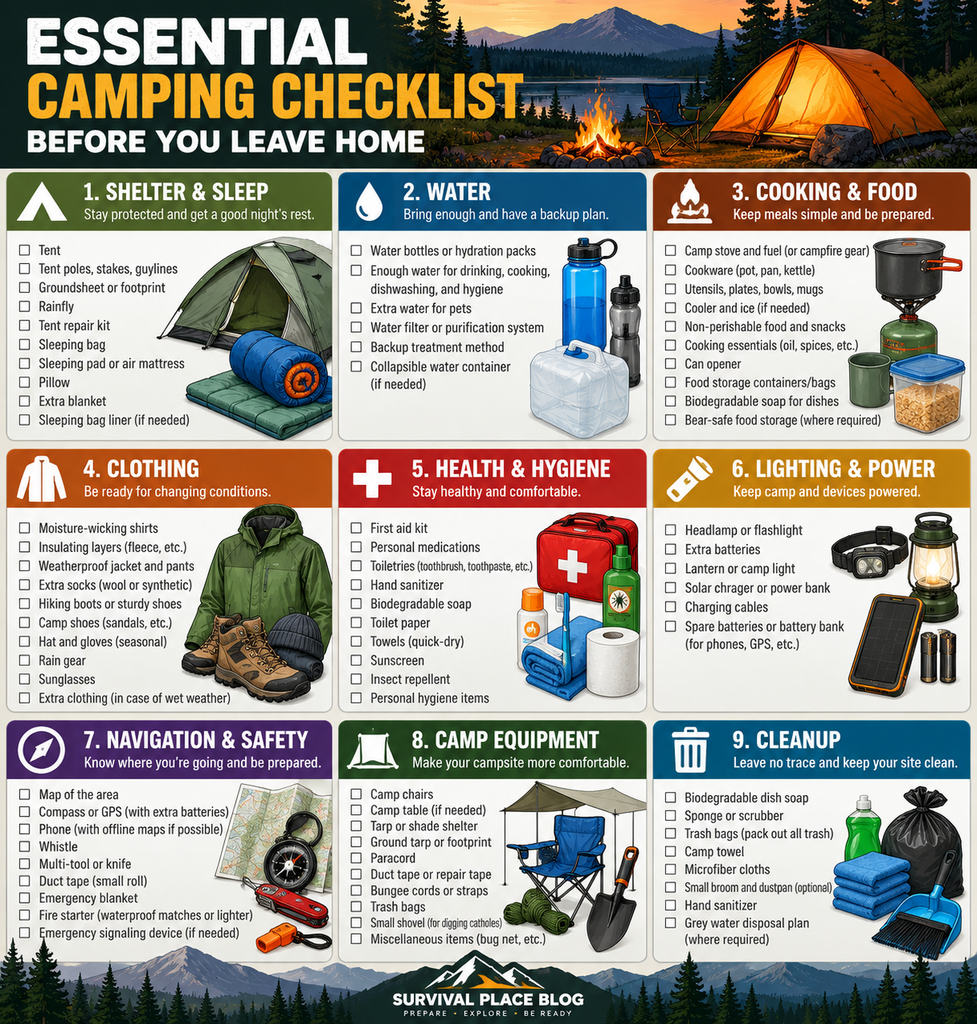
The Essential Camping Checklist
Before you leave home, use this condensed list for one final equipment check.
Shelter and Sleep
- Tent and rainfly
- Stakes and guylines
- Groundsheet or footprint
- Sleeping bag
- Sleeping pad
- Pillow
- Repair kit
Water
- Drinking water
- Water bottles
- Backup water
- Water filter or treatment method
Cooking and Food
- Camp stove
- Fuel
- Lighter or matches
- Cookware
- Utensils
- Food
- Snacks
- Cooler
- Food-storage containers
- Trash bags
Clothing
- Weather-appropriate layers
- Rain protection
- Warm layer
- Hat
- Hiking footwear
- Camp shoes
- Extra socks and underwear
Health and Hygiene
- First-aid kit
- Medications
- Sunscreen
- Insect repellent
- Toiletries
- Toilet paper
- Hand sanitizer
Lighting and Power
- Headlamp
- Flashlight
- Lantern
- Spare batteries
- Power bank
- Charging cables
Navigation and Safety
- Map
- Compass
- Phone
- Offline maps
- Whistle
- Emergency blanket
- Emergency contacts
- Satellite communicator or PLB when appropriate
Camp Equipment
- Multi-tool
- Duct tape
- Paracord
- Camp chairs
- Table if needed
- Daypack
Cleanup
- Trash bags
- Cleaning supplies
- Reusable dishes
- Food-storage containers
Don’t Pack the Same Camping Kit for Every Trip
The best camping checklist isn’t the one with the most gear. It’s the one that matches the trip you’re actually taking.
A summer weekend at a developed campground may require little more than basic shelter, food, water, clothing, lighting, and first aid. A remote trip during shoulder season can require considerably more redundancy, weather protection, navigation equipment, emergency communication, and backup supplies.
Before every trip, ask yourself three questions:
What conditions am I expecting?
What could realistically go wrong?
What would I wish I had if it did?
Answer those honestly, work through your checklist before leaving home, and you’ll be much less likely to discover the one thing you forgot after you’re already miles from the nearest store.