Affiliate Disclosure: This post contains affiliate links. If you purchase through these links, Survival Place Blog may earn a commission at no additional cost to you. As an Amazon Associate I earn from qualifying purchases.
A survival garden is less about preparing for some extreme end-of-the-world scenario and more about building another layer of food security at home. Even a modest garden can provide fresh vegetables, reduce dependence on grocery stores and teach skills that become increasingly valuable when normal supplies are disrupted.
The important difference between an ordinary backyard garden and one designed around preparedness is planning.
Instead of choosing plants only because they look interesting or taste good, you also consider productivity, nutrition, storage life, available space, climate and how reliably you can grow them.
You don’t need acres of land to start.
You need a realistic plan and a willingness to learn.
What Is a Survival Garden?
A survival garden is a food-producing garden planned partly around household resilience.
It can be as small as containers on a patio or as large as a traditional backyard vegetable garden.
The objective isn’t necessarily to grow every calorie your family consumes. For most households, that’s unrealistic.
A better goal is to produce useful foods that supplement what you already store and buy.
A productive garden can provide:
- Fresh vegetables
- Herbs
- Potatoes and other root crops
- Beans
- Squash
- Berries
- Fruit
- Seeds for future planting
More importantly, gardening gives you experience producing food before you actually need that skill.
Start With Your Growing Conditions
Before buying seeds, evaluate the space you have.
Look at your property throughout the day rather than assuming you know where the sun falls.
Many common vegetable crops perform best with substantial direct sunlight, although exact requirements vary by plant and climate.
Also consider:
- Water access
- Soil drainage
- Wind exposure
- Wildlife pressure
- Available space
- Slope
- Existing trees and roots
- Accessibility
- Proximity to your house
A garden that’s inconvenient to water, weed or harvest is harder to maintain.
Your climate matters too. Knowing your approximate growing zone and typical frost dates helps narrow down which crops make sense for your area.
Start With the Soil
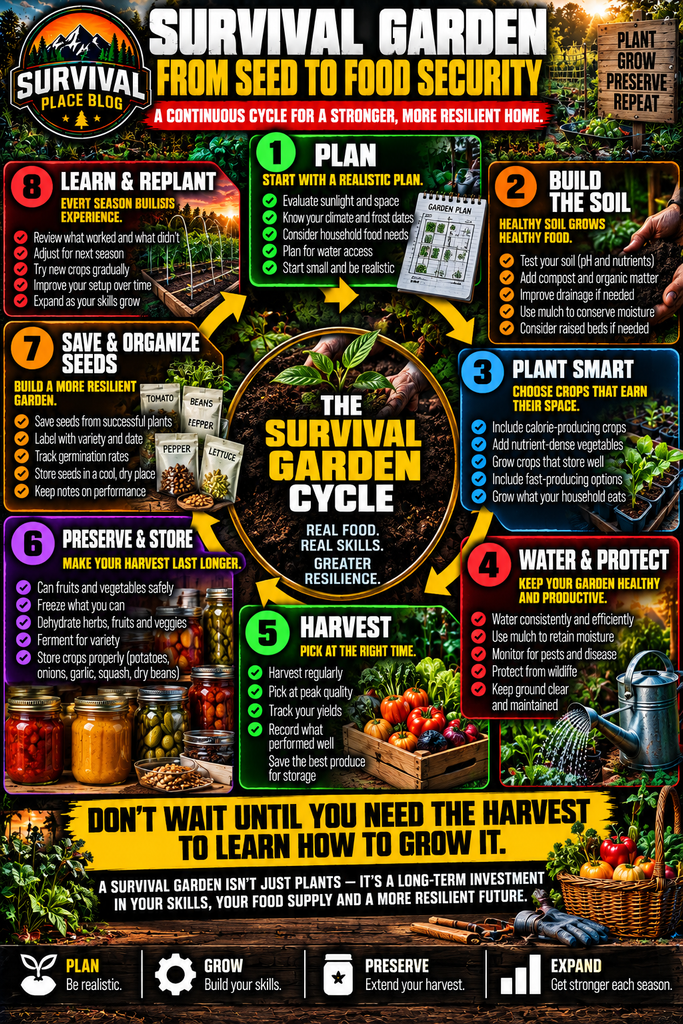
Healthy soil is one of the most valuable resources in a productive garden.
Don’t assume poor-looking soil means you can’t grow food. Soil can often be improved gradually with organic matter and appropriate amendments.
A soil test can help identify pH and nutrient conditions instead of leaving you to guess.
Depending on the results, improvements might include:
- Compost
- Aged organic matter
- Appropriate fertilizer
- Mulch
- Drainage improvements
Raised beds can be useful where native soil is poor, drainage is difficult or bending and kneeling are concerns, but they aren’t required for a productive survival garden.
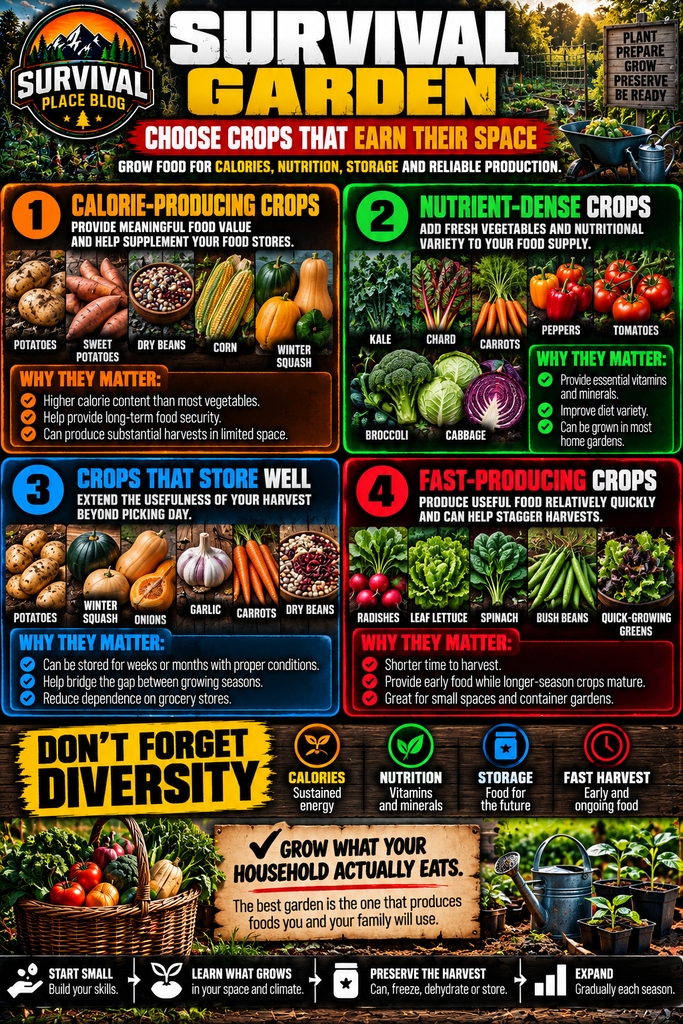
Choose Crops That Earn Their Space
A preparedness garden shouldn’t be filled entirely with low-calorie vegetables.
Lettuce is useful and easy to grow, but lettuce alone isn’t going to provide meaningful food security.
Try to balance several types of crops.
Calorie-Producing Crops
Depending on climate and available space, consider:
- Potatoes
- Sweet potatoes
- Dry beans
- Corn
- Winter squash
Nutrient-Dense Vegetables
Options may include:
- Kale
- Chard
- Carrots
- Peppers
- Tomatoes
- Broccoli
- Cabbage
Crops That Store Well
Depending on variety and storage conditions:
- Potatoes
- Winter squash
- Onions
- Garlic
- Carrots
- Dry beans
Fast-Producing Crops
Quick-growing foods can also be valuable:
- Radishes
- Leaf lettuce
- Spinach
- Bush beans
- Some greens
The exact mix should reflect your climate, space and what your household actually eats.
Growing 50 pounds of something nobody likes isn’t much of a preparedness strategy.
Don’t Overlook Potatoes
For preparedness gardening, potatoes deserve special consideration.
They’re relatively calorie-dense compared with many common garden vegetables, can produce a substantial harvest in limited space and can be stored after harvest under appropriate conditions.
They’re also versatile in the kitchen.
If space is limited, containers or grow bags may provide another way to experiment with potato production.
This doesn’t mean potatoes should dominate your garden. Diversity matters because weather, pests and disease can affect different crops differently.
Grow What You Already Eat
This sounds obvious, but it’s one of the easiest gardening mistakes to make.
Seed catalogs make everything look appealing.
Before planting, look at what your household buys regularly.
Do you eat tomatoes every week?
Beans?
Potatoes?
Peppers?
Onions?
Leafy greens?
Start there.
A survival garden should strengthen your normal food supply rather than create a second menu nobody wants.
Plant for More Than One Harvest
A productive garden doesn’t have to produce everything at once.
Succession planting can extend the harvest by staggering planting dates or following one crop with another when conditions allow.
For example, a gardener might grow a cool-season crop early, replace it with a warm-season crop, and potentially plant another cool-season crop later.
The possibilities depend heavily on climate and growing season.
This approach can make a relatively small garden more productive throughout the year.
Be Careful With Companion-Planting Claims
Companion planting gets discussed frequently in gardening circles, but some claims are much stronger than the evidence behind them.
There are legitimate reasons to grow certain plants together.
Different plant heights can make better use of space. Flowers can support pollinators and other beneficial insects. Ground-covering plants may help shade soil.
But don’t assume planting one particular herb or flower beside a vegetable will magically eliminate pests.
Think in terms of diversity, spacing, pollination and habitat rather than garden folklore.
Rotate Crops When Practical
Growing related plants in exactly the same location year after year can contribute to certain pest and disease problems.
Crop rotation can help, particularly when you have enough garden space to make meaningful rotations.
Small raised-bed and container gardeners may have fewer options, so healthy soil, sanitation, resistant varieties and careful monitoring become especially important.
Water Efficiently
A productive garden needs a reliable water plan.
That becomes even more important during hot weather or water restrictions.
Watering deeply and appropriately for the crop generally encourages better root development than repeatedly wetting only the soil surface.
Mulch can help reduce evaporation and suppress weeds.
Drip irrigation or soaker systems can deliver water close to plant roots while reducing unnecessary water loss.
The exact watering schedule depends on soil, temperature, rainfall, plant type and stage of growth.
Avoid treating watering as a rigid calendar task.
Check the soil.
Consider Emergency Garden Water
A preparedness garden shouldn’t depend entirely on the assumption that municipal water will always be available.
Rainwater collection may provide supplemental irrigation where it is practical and legal.
Local rules regarding rainwater collection vary, so check requirements where you live before installing a large collection system.
Water conservation also matters.
Mulch, organic matter, appropriate plant spacing and watering at suitable times can reduce unnecessary water use.
Manage Pests Before They Take Over
A few damaged leaves don’t mean your garden is failing.
The first step is identifying what’s actually causing the damage.
Inspect plants regularly, including the undersides of leaves.
Look for:
- Insects
- Eggs
- Chewed leaves
- Discoloration
- Wilting
- Fungal growth
- Animal damage
Not every insect in the garden is a pest.
Pollinators, spiders and predatory insects can be valuable parts of a healthy garden ecosystem.
Rather than automatically spraying everything, identify the problem and choose the least disruptive effective solution.
Physical barriers, hand removal, row covers, sanitation and appropriate crop selection may solve many problems without routine pesticide use.
Learn to Preserve the Harvest
Growing food is only half of a preparedness garden.
Eventually you have to do something with the harvest.
Fresh vegetables can disappear quickly if everything ripens at once.
Depending on the food, preservation options may include:
- Freezing
- Dehydrating
- Canning
- Fermenting
- Dry storage
- Root-cellar-style storage
Not every preservation method is appropriate for every food.
Safe canning practices are particularly important because improperly canned foods can cause serious illness.
If you’re new to preservation, start with one method and learn it properly rather than trying everything at once.
Save Seeds With a Plan
Seed saving can make a garden more self-sustaining, but it’s more complicated than simply collecting seeds from anything that grows.
Open-pollinated varieties are generally more predictable for seed saving than hybrids.
Some plants also cross-pollinate readily, which can affect what grows from saved seed the following year.
And different crops require different seed-harvesting techniques.
Start with easier seed-saving crops and learn their requirements.
Store properly dried seeds in a cool, dry and dark location, and label them with the variety and year.
Keep Seeds Organized
Seeds are inexpensive compared with many preparedness supplies, but they’re easy to lose, damage or forget.
Keep your seed supply organized.
Useful information to record includes:
- Crop
- Variety
- Purchase or harvest year
- Approximate planting dates
- Germination results
- Harvest performance
- Problems encountered
A simple notebook can become surprisingly valuable after several growing seasons.
Add Perennial Food Sources
Not everything in a survival garden needs to be replanted every year.
Depending on your climate and available space, perennial food plants might include:
- Blueberries
- Raspberries
- Blackberries
- Strawberries
- Grapes
- Asparagus
- Rhubarb
- Fruit trees
- Nut trees
Perennials often require patience.
A fruit tree planted today may take years to become productive.
That’s exactly why establishing long-term food plants before you need them makes sense.
Containers Count
Don’t dismiss gardening because you don’t have a large backyard.
Containers can grow a surprising amount of food.
Depending on container size and conditions, you may be able to grow:
- Tomatoes
- Peppers
- Potatoes
- Herbs
- Lettuce
- Radishes
- Bush beans
- Strawberries
Containers also allow you to move some plants to better sunlight or shelter them from severe weather.
Their biggest limitation is often water. Containers can dry out considerably faster than garden soil, especially during hot weather.
Raised Beds Can Simplify a Small Garden
Raised beds can make soil management easier and provide a defined growing area.
They can also be useful for households dealing with difficult native soil.
But don’t assume expensive raised-bed systems are necessary.
Simple beds built from appropriate materials can work perfectly well.
The money you save can go toward soil, compost, irrigation and seeds—the things that actually produce food.
Expand Only After You Can Manage What You Have
A huge garden sounds impressive until weeds, pests and harvesting get ahead of you.
Start smaller than you think you need.
Learn how much time watering takes.
Learn which crops perform well.
Learn what pests show up.
Learn what your family actually eats.
Then expand.
A well-maintained 100-square-foot garden can teach you more than a neglected half-acre.
Keep Basic Garden Tools on Hand
You don’t need a shed full of expensive equipment.
A basic home garden can usually accomplish a lot with:
- Shovel or spade
- Garden fork
- Hand trowel
- Hoe
- Pruning shears
- Watering equipment
- Work gloves
- Buckets
Choose durable tools that can be repaired or replaced easily.
Protect Your Garden From Wildlife
Depending on where you live, deer, rabbits, squirrels, birds and rodents may cause more trouble than insects.
A fence may be necessary in areas with heavy deer pressure.
Netting or other physical barriers may protect specific crops.
The earlier you identify local wildlife problems, the easier they are to plan around.
Don’t wait until the night before harvest to discover something else likes your tomatoes too.
Keep Gardening Records
Write down what happens each season.
Record:
- Planting dates
- Varieties
- Weather problems
- Pest problems
- Harvest dates
- Approximate yields
- Preservation results
- Crops your family liked
Over time, those notes become a customized growing guide for your own property.
That’s much more useful than relying entirely on generalized planting advice.
Connect Your Garden to Your Food Storage Plan
A survival garden shouldn’t exist separately from the rest of your preparedness system.
If you grow dry beans, know how you’ll dry and store them.
If you grow tomatoes, decide whether you’ll eat, freeze, dehydrate or preserve them.
If you grow potatoes and onions, identify an appropriate storage location.
If you grow more than you can consume immediately, have a plan before harvest.
Stored food provides immediate reserves.
A garden provides renewable production.
Used together, they’re stronger than either approach alone.
A Simple First-Year Survival Garden
You don’t need twenty different crops your first year.
For a manageable beginner garden, you might start with several foods your household already uses, such as:
- Potatoes
- Bush beans
- Tomatoes
- Zucchini or summer squash
- Leafy greens
- Carrots
- Onions
- Herbs
The exact choices should change based on climate, available space and your family’s preferences.
The objective of year one isn’t maximum food production.
It’s learning.
Your First Survival Garden Checklist
Before planting, make sure you can answer these questions:
- Where gets the best sunlight?
- Where will the water come from?
- What condition is the soil in?
- What crops does my household actually eat?
- What grows reliably in my climate?
- How much garden can I realistically maintain?
- How will I handle common pests?
- What will I do with excess harvest?
- Which seeds might I save?
- What did I learn this season?
If you can answer those questions, you’re already approaching gardening as a preparedness skill rather than simply planting vegetables and hoping for the best.
Start Before You Need the Garden
The worst time to learn how to grow food is when your household suddenly depends on the harvest.
Gardening involves mistakes.
Seeds fail to germinate.
Weather changes.
Plants get diseases.
Animals find your vegetables.
Sometimes a crop simply doesn’t perform well.
That’s normal.
Every growing season gives you experience that can’t be purchased and stored on a shelf.
Start with a manageable plot or a few containers. Learn what grows well where you live. Improve your soil. Save notes. Preserve part of the harvest.
Then do it again next season.
A survival garden isn’t an instant replacement for the grocery store.
It’s another layer of resilience—and one that can become more productive every year you practice.