
Affiliate Disclosure: This post contains affiliate links. If you purchase through these links, Survival Place Blog may earn a commission at no additional cost to you. As an Amazon Associate I earn from qualifying purchases.
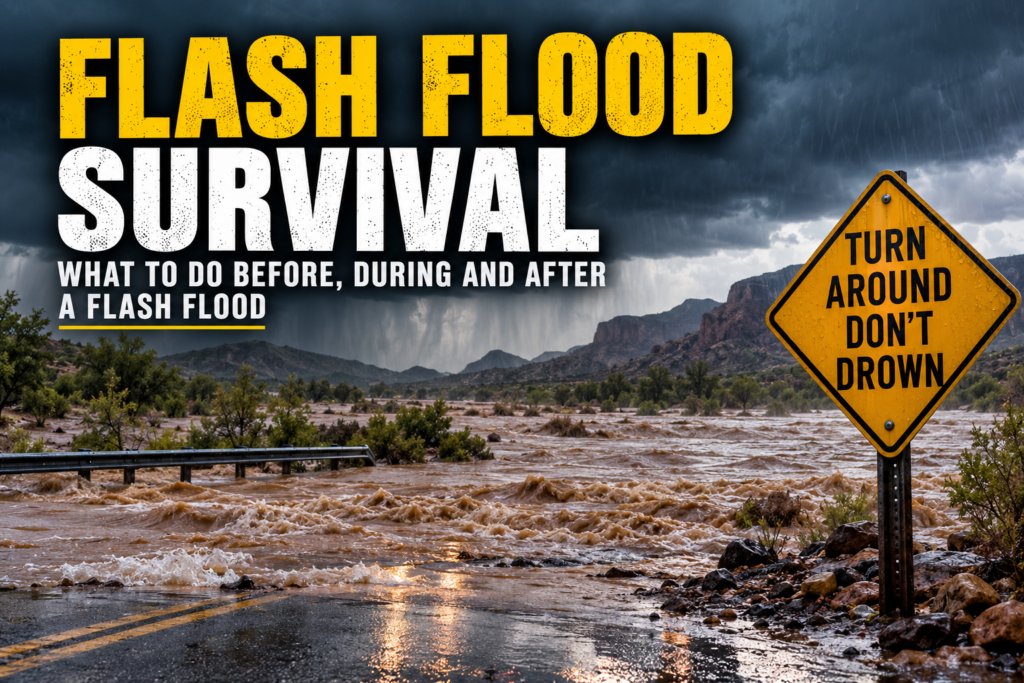
Flash floods are among the most dangerous weather emergencies because conditions can change in minutes. Heavy rainfall can turn a normally dry road, creek, drainage channel, canyon, or low-lying area into fast-moving water with little time to react.
Effective flash flood survival depends less on trying to fight the water and more on recognizing the danger early, avoiding flooded areas, and moving to a safer location before escape routes disappear.
Whether you’re driving, hiking, camping, at home, or traveling through unfamiliar terrain, knowing what to do before the water arrives can make a critical difference.
Why Flash Floods Are So Dangerous
A flash flood is different from the slow rise of water people often picture when they think about flooding.
Water can rise rapidly, and its appearance can be deceptive. A flooded roadway that looks shallow may conceal a washed-out road, damaged bridge, deep channel, or strong current.
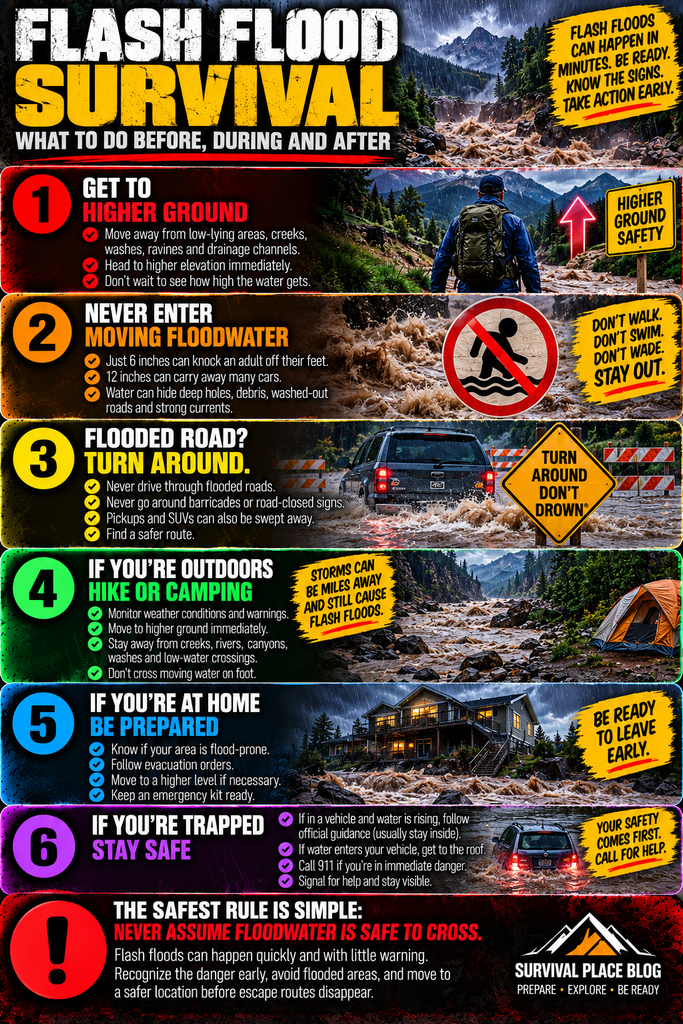
According to the National Weather Service, just six inches of fast-moving floodwater can knock an adult off their feet, while approximately 12 inches of rushing water can carry away many cars.
The safest rule is simple: never assume floodwater is safe to cross.
Know the Difference Between a Flash Flood Watch and Warning
Weather terminology matters when conditions are deteriorating quickly.
A Flash Flood Watch means conditions are favorable for flash flooding. You should monitor weather information closely and be prepared to move if necessary.
A Flash Flood Warning means flash flooding is occurring, imminent, or considered a serious immediate threat in the warned area. Take the warning seriously and follow instructions from local authorities.
Don’t wait until you can actually see rapidly rising water before deciding what to do.
If you’re in a low-lying area, canyon, drainage area, or another location vulnerable to flash flooding, knowing your route to higher ground ahead of time is far safer than trying to figure it out after water begins rising.
Scenario 1: You Encounter Floodwater While Driving
You’re traveling during heavy rain and reach a section of road covered by water.
This is one of the most dangerous flash-flood situations because drivers often believe they can judge the depth of the water or make it across before conditions worsen.
Don’t try.
Turn around and find another route.
Never drive around barricades or road-closed signs. Emergency crews may know that the road, bridge, or culvert ahead has become unsafe even if you cannot see the danger.
Floodwater can also hide:
- Washed-out pavement
- Missing sections of roadway
- Deep holes
- Debris
- Strong currents
- Damaged bridges
- Downed electrical lines
Your vehicle’s size doesn’t make crossing safe. Pickups and SUVs can also be swept away.
For a broader look at preparing your vehicle for evacuations, severe weather, and other emergencies, see our guide, Bug-Out Vehicle Guide: How to Prepare Your Vehicle for an Emergency.
What If Your Vehicle Becomes Trapped?
This situation requires more care than the old advice to simply get out of the vehicle.
If your vehicle is trapped in rapidly moving floodwater, current National Weather Service guidance advises staying inside the vehicle. If water begins rising inside the vehicle, seek refuge on the roof.
Conditions can vary dramatically, so follow instructions from emergency responders whenever possible and call 911 if you’re in immediate danger.
The best outcome is still avoiding the flooded roadway entirely.
Scenario 2: You’re Hiking or Camping When a Flash Flood Develops
Flash flooding can be especially dangerous outdoors because the storm causing the flood may not necessarily be directly overhead.
Water can move downstream from rainfall that occurred miles away.
If you’re hiking or camping near a:
- Creek
- River
- Canyon
- Wash
- Ravine
- Drainage channel
- Low-water crossing
pay close attention to weather conditions and warnings.
If flooding threatens, move to higher ground immediately.
Do not wait beside a creek to see how high it gets, and don’t attempt to cross moving floodwater on foot.
The original version of this article suggested finding the shallowest location and wading through if necessary. We’re removing that advice. The safer strategy is to avoid entering moving floodwater and seek higher ground.
Watch for Natural Warning Signs
Even without an alert on your phone, rapidly changing conditions can warn you that something is wrong.
Watch and listen for:
- Sudden increases in water level
- Water becoming muddy or filled with debris
- An unusual roaring sound upstream
- Heavy rainfall
- Rapidly strengthening currents
- Debris moving downstream
At night, recognizing these hazards becomes even more difficult.
If heavy rain is expected, avoid setting up camp immediately beside streams, washes, or other low-lying drainage areas in the first place.
If camping is part of your preparedness or outdoor plans, use our Essential Camping Checklist: Everything You Need for a Safe and Comfortable Trip to make sure the basics are covered before you head out.
Scenario 3: You’re at Home When Water Begins Rising
What you should do depends on your location, the type of flooding, and instructions from local emergency officials.
Monitor emergency alerts and be prepared to evacuate immediately if authorities tell you to leave.
If you have time and can do so safely, gather essential items such as:
- Phones
- Medications
- Drinking water
- Flashlights
- Emergency radio
- Important documents
- Pet supplies
- Basic emergency kit
A weather radio such as the Midland ER310 Emergency Crank Weather Radio provides another way to receive NOAA weather information when severe weather or power outages disrupt normal communications.
Never risk your life trying to save possessions.
If evacuation routes are still safe and officials tell you to evacuate, leave promptly. Waiting can allow roads to become impassable.
If You Become Trapped in a Building
Move to a higher level if rising water prevents you from safely leaving.
If necessary, move onto the roof and signal for help.
Avoid entering a closed attic where rising water could trap you without an escape route to the roof.
Call 911 if you’re in immediate danger and provide your location as accurately as possible.
Scenario 4: A Flash Flood Happens at Night
Nighttime flooding deserves special attention because darkness makes it much harder to judge water depth, road conditions, terrain, and the speed of moving water.
A road you routinely travel during daylight may look completely different in heavy rain at night.
Don’t let familiarity with the road convince you that it’s safe.
If you encounter water across the roadway, stop and turn around.
Keep a dependable flashlight or headlamp where you can reach it quickly rather than buried underneath other emergency supplies.
The Energizer Universal LED Headlamp is a practical hands-free lighting option for emergency kits, vehicles, and nighttime evacuations.
Your phone’s flashlight can help temporarily, but preserving your phone battery for communication and emergency alerts may become important during an extended emergency.
Scenario 5: You’re Outside and Cut Off by Rising Water
Your priority is getting away from low ground without entering moving floodwater.
Move toward higher terrain if you can reach it safely.
Do not deliberately walk, swim, or wade through flowing floodwater to reach the opposite side. Water depth and current are difficult to judge, and the ground beneath the water may no longer be intact.
Stay away from:
- Drainage ditches
- Culverts
- Riverbanks
- Fast-moving streams
- Flooded bridges
- Downed power lines
- Debris-filled water
If you’re trapped in a safe location above the water, call for help rather than taking an unnecessary chance crossing the flood.
Scenario 6: The Water Has Receded
The end of the rain doesn’t necessarily mean the emergency is over.
Floodwater can leave behind damaged roads, contaminated water, unstable structures, electrical hazards, sewage, chemicals, sharp debris, and other dangers.
Avoid unnecessary contact with floodwater and standing water.
For additional guidance on staying safe around contaminated floodwater and other post-flood hazards, see the CDC’s Flood Safety guidance.
Returning Home After a Flood
Do not enter a visibly damaged home until authorities or qualified professionals determine that it is safe.
Be alert for:
- Structural damage
- Electrical hazards
- Gas leaks
- Contaminated water
- Sewage
- Mold
- Damaged appliances
- Broken glass and sharp debris
Never touch electrical equipment while you’re wet or standing in water.
If you smell gas or suspect a leak, leave the area and contact the appropriate utility or emergency service.
Don’t Assume Your Drinking Water Is Safe
Flooding can contaminate private wells and public water systems.
Follow local health department or water utility instructions concerning drinking water.
Depending on local guidance, safe water may include commercially bottled water or water that has been properly boiled or treated.
A portable water filter can be a useful component of an emergency kit, but not every filter removes every type of contaminant. Chemical contamination and certain microorganisms may require treatment beyond what a particular portable filter provides.
For situations where an appropriate portable filter can be used safely, the Sawyer MINI Water Filtration System is a compact option for emergency kits and evacuation gear.
Prepare Before Flash Flooding Happens
The best time to make flood decisions is before heavy rain begins.
Start by learning whether your home, workplace, commute, campsite, or frequently traveled roads are vulnerable to flooding.
Know more than one route to higher ground.
If you’re traveling, pay attention to the forecast before entering remote areas where cell coverage or alternate roads may be limited.
Build a Practical Flood Emergency Kit
You don’t need a flood-specific bag filled with specialized equipment. A well-built general emergency kit already covers many of the things you may need.
Useful supplies include:
- Drinking water
- Shelf-stable food
- First-aid supplies
- Flashlights or headlamps
- Spare batteries
- Weather radio
- Phone charging equipment
- Necessary medications
- Local maps
- Emergency contact information
- Copies of important documents
- Weather-appropriate clothing
- Basic sanitation supplies
For keeping basic medical supplies together and ready to grab, the EVERLIT 250-Piece Survival First Aid Kit is a practical option for a household or vehicle emergency kit.
Keep important documents and essential electronics protected from water when practical.
If flooding is a realistic risk where you live, consider keeping critical items somewhere you can reach them quickly rather than storing everything in a basement or another flood-prone location.
For help building the core supplies your household should have ready before an emergency, see our guide, Start Here: Your 72-Hour Preparedness Plan.
Have More Than One Way to Receive Warnings
Don’t rely entirely on a single phone app.
Severe weather can coincide with power outages, overloaded networks, damaged infrastructure, or a phone with a dead battery.
Consider using several warning sources:
- Wireless Emergency Alerts
- Local emergency notifications
- NOAA Weather Radio
- Local television or radio
- Trusted weather apps
If you’re camping or traveling in remote areas, check the forecast before leaving reliable cell coverage.
Plan for Pets and Family Members
Flood evacuation becomes harder when everyone is trying to decide what to do at the same time.
Before an emergency, determine:
- Who is responsible for children
- Who handles pets
- Where medications are stored
- Which vehicle you’ll use
- Where you’ll meet if separated
- Which routes lead away from flood-prone areas
- Where you’ll go if evacuation becomes necessary
If someone in the household has mobility limitations or other needs that could make evacuation slower, build additional time into the plan.
For a more detailed look at deciding when to leave, choosing evacuation routes, planning destinations, and getting your household out safely, see our guide, Bugging Out: How to Build an Emergency Evacuation Plan.
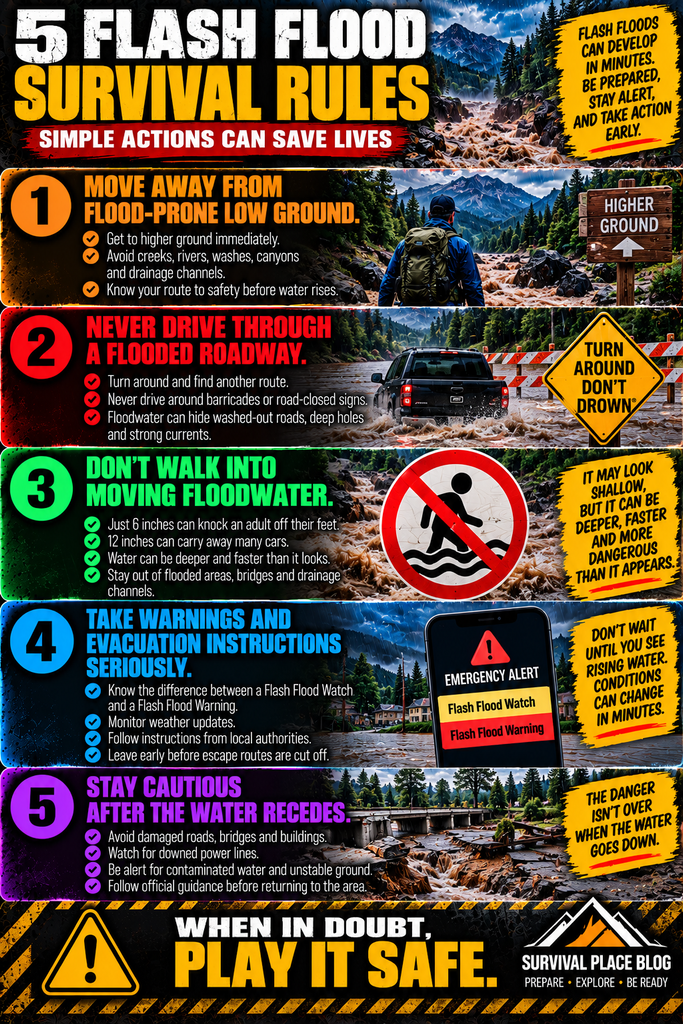
Five Flash Flood Rules Worth Remembering
If you remember nothing else from this guide, remember these five rules:
1. Move away from flood-prone low ground.
Higher ground is usually the priority when flash flooding threatens.
2. Never drive through a flooded roadway.
You can’t reliably judge the water depth or condition of the road underneath.
3. Don’t walk into moving floodwater.
Even relatively shallow fast-moving water can knock a person down.
4. Take warnings and evacuation instructions seriously.
Waiting until water is visibly rising around you can eliminate safer options.
5. Stay cautious after the water recedes.
Flood damage can create electrical, structural, contamination, and road hazards long after the immediate flooding ends.
Flash Flood Survival Comes Down to Early Decisions
Flash floods leave little room for hesitation once water begins moving rapidly.
The most important flash flood survival decisions usually happen before anyone enters the water: paying attention to warnings, avoiding low-lying areas, turning around at flooded roads, moving to higher ground early, and evacuating when authorities tell you to leave.
You don’t need to overpower moving water.
You need to avoid putting yourself in its path.
Prepare ahead of time, know where higher ground is, keep several ways to receive emergency warnings, and never gamble on a flooded road just because the water looks shallow.