Affiliate Disclosure: This post contains affiliate links. If you purchase through these links, Survival Place Blog may earn a commission at no additional cost to you. As an Amazon Associate I earn from qualifying purchases.
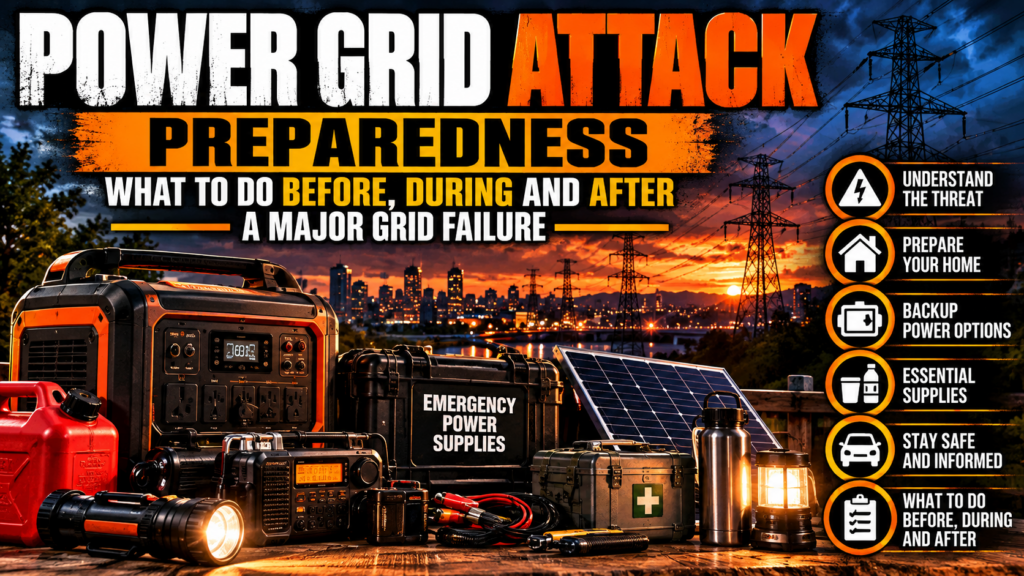
Power grid attack preparedness isn’t about assuming the entire country will suddenly go dark for months.
It’s about recognizing something much simpler: modern households depend on electricity for far more than lights.
A serious disruption could affect refrigeration, communications, fuel distribution, electronic payments, heating and cooling, medical equipment, water and wastewater services, traffic signals, businesses and many of the systems communities rely on every day.
Cyberattacks and physical attacks are legitimate concerns for the electric sector. But severe weather, equipment failures, wildfires and other emergencies can produce many of the same problems for households.
That means you don’t have to predict why the electricity failed.
You need a plan for what happens if it stays off.
This guide covers practical power grid attack preparedness—from the first minutes of an outage through a disruption lasting days or longer.
What Is a Power Grid Attack?
A power grid attack is a deliberate attempt to disrupt, damage or interfere with infrastructure involved in generating, transmitting or distributing electricity.
Broadly, deliberate attacks can include two categories.
Cyberattacks
Modern electrical systems depend heavily on digital communications, monitoring systems and operational technology.
A serious cyber incident could potentially interfere with grid operations, communications or equipment.
That doesn’t mean every cyberattack causes a blackout. Utilities and government agencies actively work on cybersecurity, resilience, detection and recovery.
But cyber risk is one reason grid operators prepare for major disruptions.
Physical Attacks
Electrical infrastructure can also be damaged physically.
Substations, transmission equipment and other facilities are spread across enormous geographic areas, which creates physical-security challenges.
Again, an attack on one piece of infrastructure does not automatically mean a nationwide blackout.
The effects would depend on what was damaged, redundancy within the system, available replacement equipment and how quickly utilities could isolate problems and restore service.
A Grid Failure Doesn’t Have to Be an Attack
For your household preparedness plan, this distinction matters.
A cyberattack, physical attack, ice storm, hurricane, wildfire, equipment failure or other event may have completely different causes.
But inside your home, many consequences can look remarkably similar:
- No electricity
- No refrigeration
- Limited communications
- Problems buying fuel
- Electronic payment interruptions
- Heating or cooling problems
- Possible water or wastewater disruptions
- Closed businesses
- Traffic problems
- Limited access to normal services
That’s why good power grid attack preparedness is really about becoming more resilient to prolonged power loss.
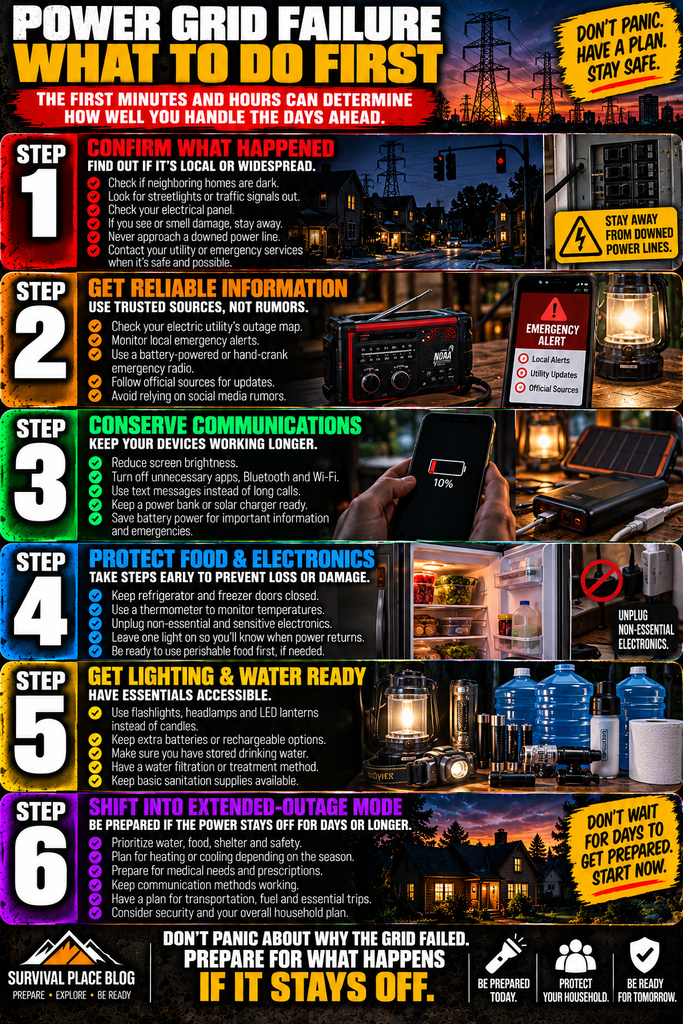
The First 30 Minutes
When electricity suddenly disappears, don’t immediately assume you’re experiencing a major grid emergency.
Start by figuring out what actually happened.
Check Your Immediate Surroundings
Look outside.
Are neighboring homes dark?
Are streetlights or traffic signals out?
Check your electrical panel to make sure the problem isn’t limited to your house.
If you smell smoke, hear electrical arcing or see damaged power lines, stay away and contact emergency services or your utility when communications are available.
Never approach a downed power line.
Check Reliable Information Sources
Use your phone while service remains available.
Check your electric utility’s outage information and local emergency-management alerts.
A battery-powered or hand-crank emergency radio gives you another way to receive information if cellular service becomes unreliable.
Start Conserving Battery Power
Don’t wait until your phone reaches 10%.
Reduce screen brightness, turn off unnecessary apps and radios such as Bluetooth when you don’t need them, and avoid streaming video.
Use text messages rather than long calls when networks are congested.
The First Few Hours
Once you’ve confirmed the outage extends beyond your home, shift into conservation mode.
Protect Refrigerated Food
Keep refrigerator and freezer doors closed.
According to federal food-safety guidance, an unopened refrigerator generally keeps food cold for about four hours, while a full freezer can maintain temperature for roughly 48 hours—about 24 hours if half full.
Don’t repeatedly open the doors to check the food.
Unplug Sensitive Equipment
Power can sometimes fluctuate as service is restored.
Unplug computers, televisions and other sensitive electronics you don’t need operating.
Leave one light switched on so you’ll know when electricity returns.
Get Your Lighting Ready
Set out flashlights, headlamps and LED lanterns before darkness arrives.
Avoid relying on candles as your primary emergency lighting because open flames create an unnecessary fire risk.
Water Comes Before Almost Everything Else
People often think first about food during an extended blackout.
Water deserves priority.
Municipal water systems frequently have backup systems and emergency procedures, so a power outage does not automatically mean the taps stop working.
But extended electrical disruptions can affect pumping, treatment and wastewater infrastructure depending on local conditions.
Your household should already have drinking water stored before an emergency occurs.
A common baseline is at least one gallon per person per day for drinking and basic sanitation, with additional water needed for pets, medical needs, hot weather and other circumstances.
A reliable water filter or other appropriate treatment method provides another layer of preparedness if your stored supply becomes insufficient.
Don’t Automatically Drink Bathtub Water
The old advice to simply fill a bathtub during every emergency needs some context.
A bathtub can be useful for storing non-potable water for flushing toilets or cleaning.
Unless you’re using a purpose-designed potable-water liner, don’t assume an ordinary bathtub is a sanitary drinking-water container.
Use clean, food-grade containers for drinking water.
Food for a Longer Grid Failure
You don’t need an exotic survival-food stockpile.
Start with food your household already eats that can be stored without refrigeration.
Useful options include:
- Canned meat, vegetables and fruit
- Rice and other dry staples
- Beans
- Pasta
- Peanut butter
- Oatmeal
- Shelf-stable milk
- Crackers
- Nuts and trail mix
- Dehydrated foods
- Freeze-dried meals
- Comfort foods
Keep a manual can opener with your supplies.
Rotate stored food into normal household use so emergency supplies don’t simply expire in the back of a closet.
Backup Power: Decide What Actually Needs Electricity
One of the biggest mistakes in emergency-power planning is trying to recreate normal household electrical consumption.
Instead, identify your critical loads.
Those might include:
- Phones
- Emergency radio
- LED lighting
- Medical equipment
- Internet equipment when service remains available
- Small fans
- Rechargeable batteries
- Refrigerator or freezer, depending on your backup system
Portable battery power stations can provide quiet backup electricity for smaller loads.
Larger systems, generators and permanently installed backup systems can support more equipment but require additional planning.
We’re intentionally leaving this section commercially neutral for now.
Generator Safety Is Non-Negotiable
If you use a gasoline, propane or dual-fuel generator, carbon monoxide is one of the biggest hazards.
Never operate a portable generator inside a house, garage, basement, shed or other enclosed or partially enclosed space.
Keep generators outdoors and well away from doors, windows and vents, following manufacturer instructions and current safety guidance.
Never attempt to power a home by connecting a generator to a household outlet.
Improper connections can create electrocution and fire hazards and can endanger utility workers.
Have working carbon-monoxide alarms in your home.
Communications When Cell Service Becomes Unreliable
Your smartphone should be one part of your communication plan—not the entire plan.
Have several ways to obtain information:
- Battery or hand-crank emergency radio
- Local emergency alerts
- Utility outage information
- Vehicle radio
- Backup charging capability
- Written family contact information
Establish a family meeting location before an emergency.
Choose an out-of-area contact who can help relay information if local networks are overloaded.
Keep important phone numbers written on paper. A dead phone shouldn’t erase your contact list.
Cash Still Has a Place in Emergency Preparedness
Electronic payment systems depend on electricity and communications.
During a widespread outage, some businesses may temporarily be unable to process credit or debit cards.
Keep a reasonable amount of emergency cash in small denominations somewhere secure.
You don’t need enormous amounts of money hidden around your house.
The purpose is simply to handle essential purchases if electronic payments aren’t working.
Fuel and Transportation
A widespread electrical outage can create problems at fuel stations because pumps and payment systems require electricity.
Don’t make a habit of driving on an almost-empty tank.
Keeping your vehicle reasonably fueled gives you more options during an emergency.
Also keep basic vehicle supplies available:
- Phone charging cable
- Flashlight
- Water
- Seasonal clothing
- Basic first aid supplies
- Paper map
- Jumper cables or jump pack
Avoid unnecessary driving during a widespread blackout.
Dark traffic signals, emergency activity and congestion can make roads more dangerous.
Home Security During a Grid Failure
A blackout does not automatically mean widespread crime.
But losing exterior lighting, alarm systems, cameras or electronic access controls can change your normal security situation.
Start with simple measures:
- Lock doors and windows
- Keep exterior areas clear
- Use battery or solar lighting where appropriate
- Keep flashlights accessible
- Know your neighbors
- Avoid advertising expensive emergency supplies
- Keep family members informed about who’s coming and going
Preparedness should improve awareness—not create paranoia.
Heating During a Winter Grid Failure
Cold-weather outages can become dangerous.
Close off unused rooms and concentrate household activity in a smaller portion of the home.
Wear multiple loose layers and use blankets or sleeping bags.
Close curtains at night to reduce heat loss.
Never use a charcoal grill, camp stove or outdoor heater inside your home unless that specific appliance is explicitly designed and approved by its manufacturer for indoor use.
Never use a gas oven as a home heating system.
Carbon monoxide can kill without warning.
Cooling During a Summer Grid Failure
Extreme heat can become dangerous faster than many people expect.
During a hot-weather outage:
- Drink water regularly
- Reduce strenuous activity
- Use the coolest part of the home
- Block direct sunlight
- Use battery-powered fans when useful
- Wear lightweight clothing
- Check on older adults and other vulnerable people
If your home becomes dangerously hot and a cooling center or other safe air-conditioned location is available, relocating temporarily may be safer than remaining home.
Sanitation When Water Systems Are Affected
Sanitation becomes increasingly important as an outage stretches from hours into days.
Keep supplies such as:
- Heavy-duty garbage bags
- Hand sanitizer
- Soap
- Disinfectant
- Toilet paper
- Disposable gloves
- Wet wipes
- Feminine hygiene products
- Diapers when needed
- Pet-waste supplies
If local authorities issue boil-water or wastewater instructions, follow those instructions rather than improvising.
Medical Preparedness
Anyone who relies on electrically powered medical equipment needs an outage plan before electricity fails.
That may include backup batteries, alternate power sources, medication-storage planning and knowing when relocation is necessary.
Maintain an up-to-date list of:
- Medications
- Dosages
- Allergies
- Medical conditions
- Physicians
- Emergency contacts
Don’t allow essential prescription medication to routinely reach the final dose before arranging refills when your prescription and insurance rules allow reasonable planning.
Your Neighbors Can Be an Asset
The old version of this article recommended creating a neighborhood watch and even preparing for barter.
We’re taking a different approach.
During real emergencies, cooperation is generally more useful than imagining an instant barter economy.
Know which neighbors may need extra help.
One household may have medical training. Another may have tools. Someone else may have information about local conditions.
You don’t need to combine everyone’s emergency supplies.
You simply want enough community connection that people aren’t operating completely alone.
Should You Stay Home or Leave?
For many outages, staying home is the safest and easiest option.
Your house already contains your food, water, clothing, shelter and emergency supplies.
But evacuation or temporary relocation can make sense when remaining home creates greater risk.
Examples include:
- Dangerous indoor temperatures
- Wildfire or another approaching hazard
- Medical equipment that cannot remain powered
- Official evacuation orders
- Structural damage
- Unsafe water or sanitation conditions
- Another immediate threat to life or health
Don’t evacuate merely because the electricity is off.
Make the decision based on actual conditions. If leaving becomes necessary, having a pre-packed go-bag can make a rushed evacuation safer and more organized.
What About Bartering?
You may see preparedness advice recommending stockpiles of batteries, alcohol, food or other items specifically for barter after the grid goes down.
That shouldn’t be a household priority.
Store supplies because your household needs them.
In most realistic emergencies, cash, community cooperation, established emergency services and ordinary commerce recovering over time are more relevant than building a miniature post-collapse trading economy.
If you have extra supplies and choose to help someone, that’s different from deliberately depriving your own household of essentials because you expected them to become currency.
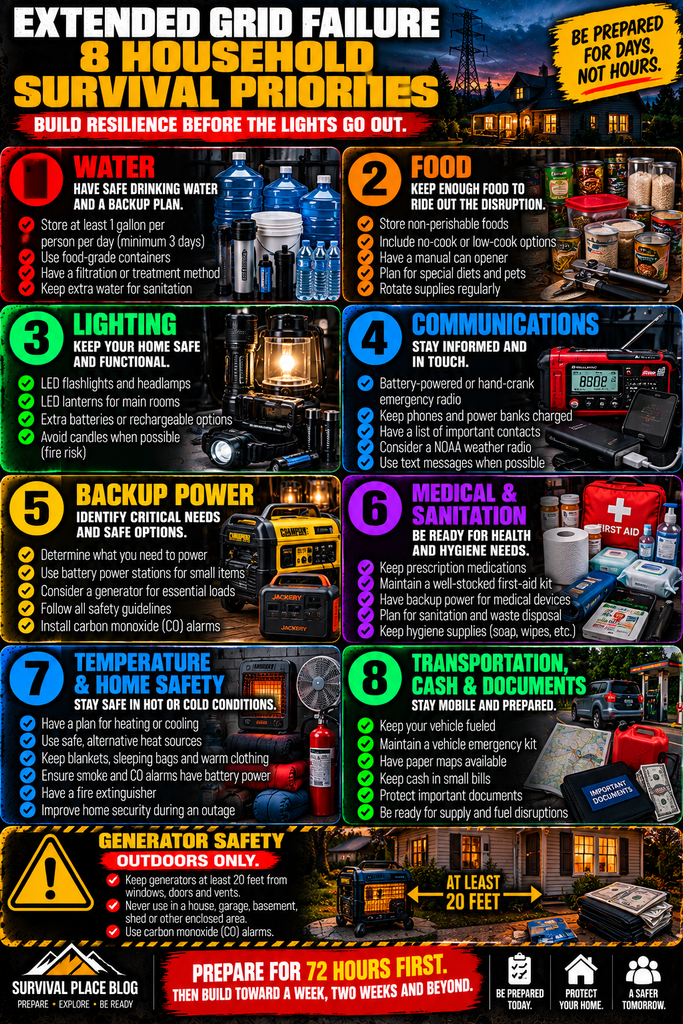
Complete Power Grid Attack Preparedness Checklist
Water
- Stored drinking water
- Food-grade water containers
- Water filtration/treatment capability
- Water for pets
- Method for carrying water
- Non-potable water plan for sanitation
Food
- Shelf-stable foods
- Manual can opener
- Foods requiring little or no cooking
- Snacks and comfort foods
- Infant or special-diet foods when needed
- Pet food
Lighting
- LED flashlights
- Headlamps
- LED lanterns
- Spare batteries
- Rechargeable lighting
Communications
- Emergency radio
- Charged phones
- Power banks
- Charging cables
- Written emergency contacts
- Family communication plan
Backup Power
- Charged portable power station if owned
- Generator if appropriate
- Generator fuel stored safely and legally
- Appropriate extension cords/equipment
- Carbon-monoxide alarms
Medical
- First-aid kit
- Prescription medications
- OTC medications normally used by your household
- Backup plan for powered medical devices
- Copies of important medical information
Sanitation
- Toilet paper
- Soap
- Hand sanitizer
- Garbage bags
- Disinfectant
- Wet wipes
- Gloves
- Hygiene products
- Diapers when applicable
Home and Safety
- Fire extinguisher
- Smoke alarms
- Carbon-monoxide alarms
- Basic hand tools
- Work gloves
- Weather-appropriate clothing
- Blankets or sleeping bags
Transportation
- Adequately fueled vehicle
- Paper maps
- Vehicle emergency kit
- Phone charger
- Jumper cables or jump pack
Financial and Documents
- Emergency cash in small denominations
- Identification
- Insurance information
- Important contact numbers
- Copies of critical documents
- Waterproof document storage
Children and Pets
- Diapers and formula when applicable
- Familiar foods
- Comfort items
- Books or games
- Pet food
- Extra pet water
- Leashes or carriers
- Needed pet medications
What Not to Do During a Major Grid Failure
Some mistakes can turn an inconvenient outage into a genuine emergency.
Don’t run generators indoors.
Don’t use charcoal grills indoors.
Don’t touch downed power lines.
Don’t repeatedly open your refrigerator and freezer.
Don’t burn through phone batteries for entertainment.
Don’t assume every rumor on social media is accurate.
Don’t drink questionable water simply because it looks clean.
Don’t drive unnecessarily through intersections with failed traffic signals.
Don’t assume an outage means society has collapsed.
And don’t wait until the electricity is already gone to start thinking about preparedness.
Preparing for a Week or Longer
A three-day emergency kit is an excellent starting point.
It isn’t necessarily the finish line.
Once your household can comfortably handle 72 hours, gradually extend your supplies. For households that want to build beyond short-term preparedness, our 90-day emergency preparedness checklist provides a step-by-step plan for creating a three-month supply.
Aim first for a week.
Then two weeks.
Households that want greater resilience can continue building from there based on available space, budget, climate and individual needs.
You don’t have to buy everything at once.
Add extra shelf-stable food during normal grocery trips. Increase water storage gradually. Add better lighting. Improve backup charging. Build a medical and sanitation reserve.
Preparedness becomes much more affordable when it’s built over time.
Power Grid Attack Preparedness Is Really About Resilience
Nobody at home can control what happens to the electrical grid.
What you can control is how dependent your household is on electricity continuing uninterrupted every hour of every day.
Good power grid attack preparedness means having enough water, food, lighting, information, backup power, medical supplies and practical planning to handle a serious disruption without immediately entering crisis mode.
The same preparation helps during cyber incidents, physical infrastructure damage, extreme weather, wildfires, equipment failures and ordinary extended blackouts.
You don’t have to know what caused the outage to be ready for what comes next.