Affiliate Disclosure: This post contains affiliate links. If you purchase through these links, Survival Place Blog may earn a commission at no additional cost to you. As an Amazon Associate I earn from qualifying purchases.
When a disaster disrupts water service or damages the sewer system, everyday tasks can become serious challenges. Flushing a toilet, washing your hands, cleaning dishes, and disposing of household waste may no longer be as simple as turning on a faucet.
Most households prepare for emergencies by storing drinking water, food, flashlights, and batteries. However, emergency sanitation and hygiene deserve just as much attention. Without a safe way to manage human waste, maintain personal cleanliness, and prevent contamination, even a short disruption can create unhealthy living conditions.
The good news is that you don’t need an elaborate setup to prepare. A few dedicated supplies, a practical household plan, and an understanding of basic sanitation principles can help your family manage an unexpected outage safely.
This guide explains what happens when water and sewer services fail, how to prepare emergency toilet and handwashing arrangements, and what to do when normal sanitation systems are unavailable.
1. What Happens When Water and Sewer Systems Fail?
Water and sewer disruptions can happen for several reasons, including severe storms, earthquakes, flooding, extended power outages, damaged infrastructure, and contaminated municipal water supplies.
The consequences depend on which services have failed.
Water Supply Interruptions
When household water stops flowing, you may lose the ability to:
- Flush toilets normally.
- Wash hands with running water.
- Bathe or shower.
- Wash dishes and cooking utensils.
- Clean contaminated surfaces.
- Wash clothing and bedding.
Even when a toilet still works mechanically, flushing requires water. More importantly, a functioning toilet does not necessarily mean the sewer system is safe to use.
Sewer System Failures
A sewer disruption creates a different problem.
Wastewater may be unable to leave your home safely because of blocked pipes, damaged sewer lines, flooding, or failures at pumping and treatment facilities.
Warning signs may include sewage backing up into drains, overflowing fixtures, or official notices restricting sewer use.
Never assume that adding water to a toilet makes it safe to flush during a sewer failure. If local authorities advise residents to stop using toilets or drains, follow that guidance until the system is cleared for use.
For a broader look at how infrastructure interruptions affect daily life, our guide to surviving 48 hours without power explains why preparing for the loss of basic household services matters.
2. Why Emergency Sanitation and Hygiene Matter
Sanitation is about more than comfort. It helps prevent contact with human waste, reduces opportunities for disease transmission, and keeps food preparation and living spaces safer.
When normal services are unavailable, the most important goals are to:
- Keep human waste contained and away from people, food, and water.
- Maintain effective handwashing practices.
- Separate clean supplies from contaminated materials.
- Dispose of waste according to local emergency instructions.
- Clean and disinfect appropriate surfaces when needed.
- Protect children, older adults, and people with additional care needs.
These goals become increasingly important during extended outages, particularly when several people share a small living space.
The Centers for Disease Control and Prevention provides emergency hygiene and sanitation guidance that can help households reduce exposure to contaminated water and waste.
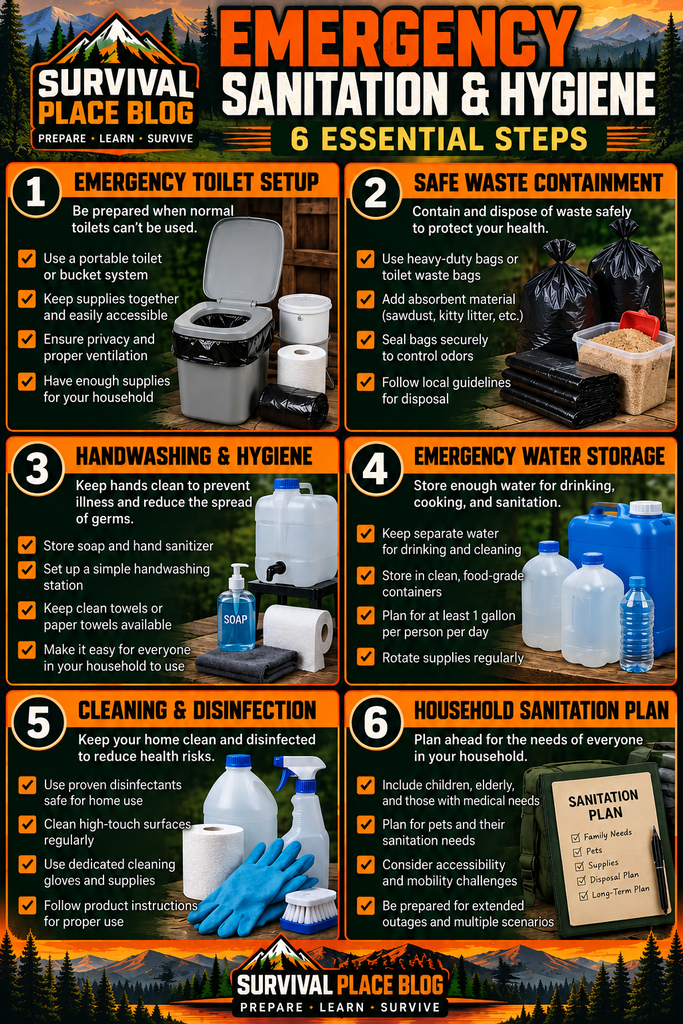
3. Build an Emergency Sanitation Supply Kit
A dedicated sanitation kit allows you to respond quickly instead of searching for supplies after an outage begins.
Store it in a clearly labeled container where household members can find it.
Emergency Toilet Supplies
- Portable camping toilet or sturdy bucket toilet arrangement.
- Compatible waste containment bags.
- Absorbent material intended for portable toilet waste.
- Toilet paper.
- Disposable gloves.
- Hand soap and a suitable handwashing setup.
- A designated covered container for temporarily holding sealed waste bags, where local guidance permits.
Cleaning and Hygiene Supplies
- Reusable cleaning gloves.
- Household cleaning products.
- Appropriate disinfectant.
- Paper towels and cleaning cloths.
- Trash bags and a lidded trash container.
- Hand sanitizer containing at least 60% alcohol.
- Personal hygiene products.
- Menstrual hygiene supplies.
- Baby wipes and diapers, if needed.
Water and Storage Supplies
- Clearly labeled containers of clean water.
- A dispensing container for handwashing.
- Separate containers or equipment for cleaning tasks.
- Soap and disposable drying materials.
Keep sanitation supplies separate from food and drinking-water storage. Store cleaning chemicals securely and out of children’s reach.
4. Emergency Toilet Options for Your Home
One of the first questions during a water or sewer outage is simple: What happens when we can’t use the bathroom?
The answer depends on whether the water supply alone has stopped or the sewer system is also affected.
Option 1: Use Your Existing Toilet When Authorities Confirm It Is Safe
If the only problem is a loss of running water, and the sewer system remains operational, your existing toilet may still be usable through manual flushing.
However, confirm that sewer use is permitted before attempting this.
Avoid using valuable drinking water for flushing when safer alternatives are available.
Option 2: Set Up a Portable Emergency Toilet
A portable toilet offers a dedicated alternative when the household toilet cannot be used.
Look for a stable seat, a removable waste container, and a design that can be cleaned and stored easily.
The VINGLI Portable Toilet with Detachable Inner Bucket is one example of a compact portable toilet designed for camping and emergency use. Its removable inner bucket can simplify setup and cleaning when paired with an appropriate waste containment method.
Choose a private, well-ventilated location away from food preparation and drinking-water supplies. Make sure the toilet is stable and accessible to everyone who may need it.
Option 3: Prepare a Bucket Toilet
A sturdy bucket with a secure toilet seat can provide a basic alternative.
A bucket toilet should have:
- A stable base that will not tip easily.
- A properly fitted seat or lid.
- A compatible waste containment system.
- A method for sealing and storing waste safely.
- Nearby handwashing supplies.
Never place loose human waste directly into a household trash container.
Whichever arrangement you choose, establish a clear household procedure before an emergency occurs.
5. Safely Contain and Manage Human Waste
Human waste requires careful handling because it can contain harmful microorganisms.
A portable toilet is only part of the solution. You also need a safe plan for containing waste until an approved disposal method is available.
Use Appropriate Waste Bags
Portable toilet bags can help contain waste inside compatible toilet systems.
The Sailortenx Portable Camping Toilet Bags, 8 Gallon are marketed for camping toilets and bucket-style arrangements. Check their fit, strength, and compatibility with your chosen toilet before relying on them during an emergency.
For extended use, a waste containment system with appropriate absorbent or gelling material may make handling easier and reduce free liquid.
Important: Products advertised as biodegradable or compostable are not automatically safe to bury, place in a home compost pile, or dispose of in ordinary trash when filled with human waste.
Follow your local public health department’s emergency disposal instructions and the waste system manufacturer’s directions.
Establish a Safe Waste-Handling Routine
- Keep waste containers away from food and drinking-water supplies.
- Avoid splashing or unnecessary handling.
- Use suitable gloves when handling contaminated materials.
- Seal waste bags according to the product instructions.
- Keep sealed waste in an appropriate secure location until approved disposal is possible.
- Wash hands thoroughly after every waste-handling task.
Do not empty untreated waste into storm drains, streams, yards, or other unauthorized locations.
If local officials establish emergency waste collection or disposal sites, follow their instructions.
6. Handwashing When Running Water Is Unavailable
Handwashing remains one of the most important hygiene practices during an emergency.
It is especially important after using an emergency toilet, handling waste, changing diapers, cleaning contaminated surfaces, and before preparing or eating food.
Build a Simple Gravity-Fed Handwashing Station
You do not necessarily need to purchase a specialized handwashing station.
A practical setup can include:
- A clean container filled with water suitable for handwashing.
- A spigot or controlled dispensing outlet.
- Liquid or bar soap.
- Paper towels or another clean drying method.
- A basin or collection container to manage wastewater.
Place the station near your emergency toilet, but keep the clean-water supply protected from contamination.
Use soap and water to scrub all hand surfaces for at least 20 seconds, then rinse and dry.
When to Use Hand Sanitizer
If soap and water are unavailable, an alcohol-based hand sanitizer containing at least 60% alcohol can help reduce germs on hands that are not visibly dirty.
However, sanitizer is not a complete substitute for handwashing. It is less effective on visibly dirty or greasy hands and against certain germs.
After handling human waste, prioritize proper handwashing with soap and water whenever possible.
For detailed handwashing instructions and advice on when sanitizer is appropriate, refer to the CDC’s hand hygiene recommendations.
7. Store Water for Sanitation and Cleaning
Emergency water planning should account for more than drinking and cooking.
Households may also need water for:
- Handwashing.
- Basic personal hygiene.
- Cleaning food preparation surfaces.
- Washing essential dishes and utensils.
- Limited laundry.
- Approved toilet flushing when the sewer system is functioning.
Drinking-water needs should take priority when supplies are limited.
Separate Drinking Water From Sanitation Water
Store potable water in clean, food-grade containers and label it clearly.
Water that is not safe for drinking should never be confused with potable supplies. Use separate, clearly labeled containers and follow official guidance about which water sources are suitable for different tasks.
The FastRack 5-Gallon Hedpak provides a portable water storage option that may be useful for an emergency sanitation setup. When used for drinking water, the container must be food-grade, properly cleaned, and filled and maintained according to safe water-storage guidance.
Remember that a full five-gallon container is heavy. Place it on a stable surface and use a dispensing arrangement that minimizes spills and unnecessary handling.
What If the Water Supply Is Contaminated?
A boil-water advisory, do-not-drink advisory, and do-not-use advisory can require very different responses.
Follow the specific notice issued by your water utility or public health department.
Do not assume that boiling makes water safe when chemical contamination is involved. Likewise, do not use questionable water for handwashing or cleaning tasks unless the applicable public health guidance permits it.
For more detailed guidance on storing and managing emergency water supplies, check out our Home Water Storage guide.
8. Clean and Disinfect Surfaces Safely
During a sanitation emergency, cleaning and disinfecting are related but different tasks.
Cleaning removes dirt and organic material from surfaces.
Disinfecting uses an appropriate product or method to reduce or kill germs on suitable surfaces.
A visibly dirty surface generally needs cleaning before disinfecting.
Prioritize High-Contact Areas
Pay particular attention to:
- Toilet seats and nearby surfaces.
- Door handles.
- Faucet handles and dispensing equipment.
- Food preparation counters.
- Waste container lids.
- Shared household equipment.
Follow the disinfectant label for dilution, application, required contact time, and surface compatibility.
Never mix bleach with ammonia, acids, or other cleaning products. Dangerous gases can result.
Use Protective Cleaning Gloves
Dedicated reusable cleaning gloves can help protect hands during routine household cleaning.
The Bamllum Rubber Kitchen Dishwashing Gloves, 4 Pairs offer an inexpensive way to keep separate pairs for different cleaning tasks. Clearly designate which gloves are used for bathrooms, general household cleaning, and other purposes.
These are household cleaning gloves, not specialized protection for sewage exposure or hazardous cleanup. If raw sewage is present, follow public health guidance and use protective equipment appropriate to the hazard. Extensive sewage contamination may require professional remediation.
After use, clean reusable gloves as directed, remove them carefully, and wash your hands.
The CDC provides guidance on cleaning and disinfecting homes following emergencies and contamination events.
9. Manage Household Trash and Wastewater
A disaster may interrupt garbage collection along with water and sewer service.
Waste can accumulate quickly when households rely on disposable hygiene supplies, paper towels, food packaging, and emergency toilet products.
Household Trash
- Use sturdy trash bags.
- Keep garbage in covered containers.
- Separate ordinary household trash from human waste and potentially hazardous materials.
- Prevent access by pests and animals.
- Follow local instructions for delayed collection or temporary disposal locations.
Avoid allowing waste to accumulate in living areas.
Wastewater From Handwashing and Cleaning
Used wash water can contain soap, dirt, and microorganisms.
Do not automatically pour wastewater into a sink, toilet, storm drain, or yard during a sewer emergency.
If local authorities restrict drain use, collect wastewater safely and follow their disposal instructions.
Keep wastewater containers clearly labeled and separate from clean-water supplies.
10. Maintain Personal Hygiene During Extended Emergencies
A loss of running water does not mean every hygiene routine must stop.
The goal is to maintain cleanliness while conserving safe water and preventing cross-contamination.
Basic Personal Hygiene Priorities
- Wash hands at critical times.
- Keep the groin, underarms, and feet reasonably clean.
- Change underwear and socks when possible.
- Keep cuts and wounds clean and appropriately covered.
- Store used hygiene materials in suitable waste containers.
- Keep personal care items separate between household members.
Disposable wipes may be useful for limited personal cleaning, but they should not replace proper handwashing after toilet use or waste handling.
Never flush wipes, including those marketed as flushable, when sewer conditions are uncertain.
Dishwashing and Food Preparation
If water supplies are limited, simplify meals and reduce the number of utensils requiring cleaning.
Use clean dishes and follow food safety guidance for washing and sanitizing food-contact items when water service is disrupted.
Do not use water of uncertain safety for food preparation or dishwashing without following the applicable public health instructions.
11. Plan for Children, Older Adults, and Pets
Different household members may need different sanitation arrangements.
Infants and Young Children
Prepare for:
- Extra diapers and wipes.
- Safe diaper disposal.
- Handwashing after diaper changes.
- A clean, designated changing area.
- Child-safe storage of cleaning chemicals.
Children should be supervised around portable toilets, waste containers, and stored water.
Older Adults and People With Mobility Limitations
Consider whether an emergency toilet is stable, accessible, and positioned close enough to use safely.
Some household members may require a raised seat, commode, assistance, or additional hygiene supplies.
Plan for privacy and dignity as well as physical safety.
Pets
Store extra pet waste bags, litter, and cleaning supplies.
Keep pet waste separate from food preparation areas and household sanitation supplies. Wash hands after handling pet waste.
If evacuation becomes necessary, include pet hygiene supplies in your household emergency kit.
12. Prevent Illness and Cross-Contamination
When sanitation systems fail, preventing contamination becomes a household responsibility.
Establish separate areas for:
- Food preparation and eating.
- Clean drinking-water storage.
- Handwashing.
- Emergency toilet use.
- Waste containment.
- Cleaning equipment.
Avoid moving dirty cleaning tools between bathroom areas and food preparation surfaces.
Watch for Signs of Illness
Diarrhea, vomiting, fever, and dehydration can become more concerning when sanitation and safe water are limited.
Seek medical advice when symptoms are severe, persistent, or accompanied by signs of dehydration. Infants, older adults, and medically vulnerable household members may need prompt attention.
Do not prepare food for others while experiencing vomiting or diarrhea.
For help preparing medical supplies, prescriptions, and household health information, see our guide to Home Emergency First Aid & Medications: How to Prepare for a Disaster.
13. Prepare for a 72-Hour Outage and Longer Disruptions
Your sanitation plan should work for a short outage but also be adaptable if services remain unavailable.
First 72 Hours
Focus on the essentials:
- Confirm whether toilets and drains are safe to use.
- Set up an alternative toilet if necessary.
- Establish a handwashing station.
- Protect drinking-water supplies.
- Contain waste safely.
- Keep cleaning and hygiene materials accessible.
- Monitor official water and sewer advisories.
Extended Outages
Longer disruptions require additional planning.
Consider:
- How quickly toilet bags and other consumables will run out.
- Where sealed waste can be safely held pending approved disposal.
- How you will replenish clean water.
- Whether household members need accessible sanitation equipment.
- How to prevent odors, pests, and accidental contact with waste.
- Whether remaining at home is practical and safe.
If waste cannot be contained safely, water cannot be obtained, or sewage contamination makes the home unsafe, relocation may be necessary.
For a broader household emergency plan, start with our guide, Start Here: Your 72-Hour Preparedness Plan, which covers the essential supplies and decisions needed during the first three days.
14. Common Emergency Sanitation Mistakes
Even well-prepared households can overlook sanitation details.
Assuming Toilets Will Always Work
A water outage and a sewer failure are not the same emergency. Know when manual flushing is permitted and when all drain use must stop.
Buying a Portable Toilet Without a Waste Plan
A toilet seat or bucket alone does not solve the problem. You also need containment supplies, handwashing equipment, and an approved disposal plan.
Storing Too Little Water
Drinking water is essential, but households should also plan for basic hygiene and cleaning.
Relying Entirely on Hand Sanitizer
Sanitizer is useful in some situations, but soap-and-water handwashing remains especially important after contact with human waste.
Mixing Cleaning Chemicals
Combining household disinfectants can create dangerous chemical reactions.
Treating Compostable Bags as Automatically Safe to Bury
Product marketing does not override local public health requirements. Human waste must be handled and disposed of safely.
Forgetting to Practice
An emergency is not the ideal time to discover that a toilet bag does not fit, a water spigot leaks, or a family member cannot use the portable toilet safely.
15. Emergency Sanitation and Hygiene Checklist
Use this checklist to review your household’s readiness before water or sewer service is interrupted.
Emergency Toilet Preparation
- Confirm an alternative toilet arrangement is available.
- Store compatible waste containment bags.
- Keep appropriate absorbent materials if required.
- Identify a safe, private toilet location.
- Learn local emergency waste disposal procedures.
Handwashing and Hygiene
- Store soap and hand sanitizer.
- Prepare a simple handwashing station.
- Keep paper towels or clean drying materials available.
- Stock toilet paper and personal hygiene supplies.
- Account for children and other household needs.
Water and Cleaning
- Store emergency water in suitable containers.
- Separate drinking water from other supplies.
- Keep household cleaning products and appropriate disinfectants.
- Store dedicated cleaning gloves.
- Review chemical safety instructions.
Household Planning
- Identify who will set up sanitation equipment.
- Establish a safe waste containment routine.
- Know where official water and sewer notices are published.
- Review the plan with household members.
- Inspect and replenish supplies regularly.
A printed copy of this checklist can be stored with your sanitation supplies or included in your household emergency binder.
Download the Free Emergency Sanitation & Hygiene Checklist (PDF)
Prepare your household for water outages and sewer failures with this printable two-page checklist covering emergency toilet supplies, safe waste containment, handwashing, cleaning, and essential sanitation planning.
16. Final Thoughts: Sanitation Is an Essential Part of Preparedness
Emergency sanitation and hygiene are easy to overlook until normal household services stop working.
A loss of running water may be inconvenient, but a damaged sewer system or uncontrolled waste can create much more serious problems. Preparing for both situations gives your household more options and helps prevent avoidable health risks.
Start with the basics: a workable emergency toilet, safe waste containment supplies, a reliable handwashing setup, stored water, and cleaning materials.
Then make sure everyone in your household understands how the system works.
You don’t need to prepare for every possible disaster at once. You need a practical plan that can be put into action when ordinary services are no longer available.
Preparedness isn’t just about having enough supplies to get through an emergency. It’s about maintaining a safe and healthy place to live while you do it.