Affiliate Disclosure: This post contains affiliate links. If you purchase through these links, Survival Place Blog may earn a commission at no additional cost to you. As an Amazon Associate I earn from qualifying purchases.
How to Stay Safe When Stranded in a Foreign Country
A practical plan for flight cancellations, transportation shutdowns, severe weather, civil unrest, and other unexpected travel disruptions.
When flights are canceled, transportation shuts down, civil unrest develops, severe weather strikes, or another emergency disrupts travel, your priorities change quickly.
Instead of trying to force your original itinerary, the goal is to stabilize your situation, secure safe lodging, maintain communication, protect your essential documents and supplies, and make a safe plan for getting home.
This emergency travel survival guide focuses on practical steps you can take when you’re temporarily stranded in a foreign country and normal transportation or services are disrupted.
Whether the disruption lasts several hours or several days, having a simple plan can help you avoid unnecessary movement and make better decisions while conditions develop.
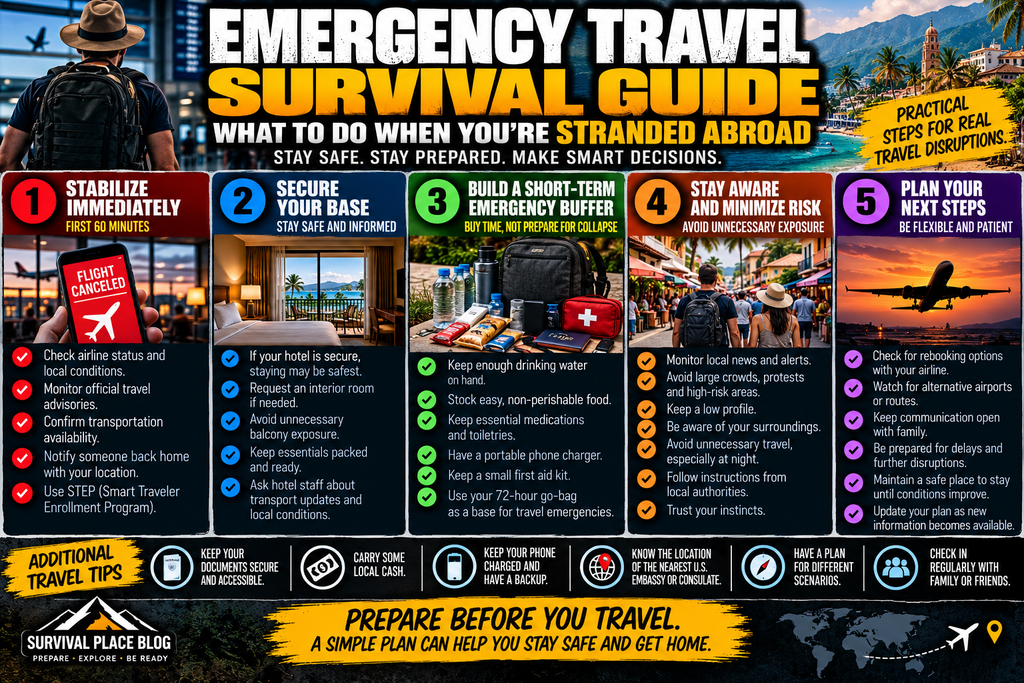
Phase 1: Stabilize Immediately (First 60 Minutes)
1. Confirm the Situation
- Check your airline app or official airline website for flight status.
- Review official government travel advisories and local emergency information.
- Confirm whether airports, roads, taxis, trains, or shuttle services are operating.
- Ask hotel or lodging staff what they know about local transportation and nearby disruptions.
- Verify important information through more than one reliable source when possible.
Treat social media posts as unverified until the information is confirmed by an official or reliable source.
2. Notify Someone Back Home
Send a simple message:
“I’m in Puerto Vallarta at [location]. Flights are paused. I’m sheltering safely. I’ll update you at [time].”
Give your contact your current location, lodging information, expected check-in time, and any confirmed changes to your travel plans. If conditions worsen or communication becomes unreliable, someone back home will know where you were staying and when they last heard from you.
Before international travel, consider enrolling in the Smart Traveler Enrollment Program (STEP) so the nearest U.S. embassy or consulate can send important safety and emergency information about your destination.
Phase 2: Secure Your Base
If You’re in a Hotel or Resort (Best Case)
If your hotel or resort is secure and local authorities have not advised evacuation, staying in place may be safer than traveling through an uncertain situation. Follow official instructions, and avoid relocating unless your current lodging becomes unsafe or you have verified that moving is the safer option.
Upgrade Your Position:
- Request an interior-facing room if needed.
- Avoid unnecessary balcony exposure.
- Keep curtains partially closed at night.
- Keep essentials packed and ready.
Establish Communication:
Ask front desk:
- Are airport transfers operating?
- Is extension available if needed?
- Are any areas restricted?
- When do they expect transport updates?
Hotels in major tourist cities often have more accurate operational intel than guests.
If You’re in an Airbnb
Evaluate:
- Is there controlled entry?
- Are you near a busy street?
- Is water and power stable?
If you feel exposed and transport is verified safe during daylight, consider relocating to a reputable hotel.
If mobility systems are suspended, shelter in place unless there is a clear safety risk.
Phase 3: Build a Short-Term Emergency Buffer
You are buying time, not preparing for long-term collapse.
If you want a compact emergency kit ready for situations like this, use our 72-Hour Go-Bag Checklist to build one before your next trip.
Water
- Fill available clean bottles and containers while safe drinking water is readily available.
- Keep enough drinking water on hand to reduce unnecessary trips for supplies.
- In hot climates, during physical activity, or during extended disruptions, your water needs may increase.
- If local authorities issue a boil-water or drinking-water advisory, follow their instructions before using tap water.
For a more complete approach to emergency water storage at home, see our Home Water Storage System guide.
Food
Focus on:
- Shelf-stable calories
- Protein + carbohydrates
- Minimal prep required
For ideas on preparing lightweight, shelf-stable food at home, see our How to Dehydrate Food for Long-Term Storage guide.
Good options:
- Nuts
- Protein bars
- Crackers
- Fruit
- Packaged meals
Order food early before shortages begin.
Power & Communication
- Fully charge devices.
- Keep one phone in low-power mode.
- Download offline maps.
- Screenshot boarding passes and confirmations.
- Rotate charging cycles.
Conserve battery intentionally.
A compact portable power bank can provide backup charging for your phone when outlets or hotel power aren’t available.
Documents & Medical
Keep in one ready pouch:
- Passport
- Government ID
- Travel insurance
- Boarding confirmation
- Prescription information and essential medical information
- An adequate supply of your regular medications for the trip, plus extra when practical and permitted
Keep passports, medications, identification, and essential travel documents in a secure place you can access quickly—not buried in checked luggage.
Phase 4: Reduce Movement
When local transportation is disrupted or authorities are advising people to remain indoors, avoid unnecessary travel until you have reliable information about conditions and available transportation.
Until conditions stabilize:
- Avoid nightlife
- Avoid crowded public spaces
- Avoid filming disturbances
- Avoid self-driving around closures
- Avoid “checking things out”
During an unstable situation, keeping a low profile and avoiding unnecessary movement can reduce your exposure to crowded areas, transportation problems, demonstrations, road closures, and other developing hazards
Phase 5: Implement a Daily Stability Routine
Structure prevents panic.
Morning
- Check airline status
- Review official advisories
- Confirm hotel updates
- Assess supplies
Midday
- Hydrate
- Light movement inside property
- Recharge devices
Afternoon
- Reconfirm flight operations
- Ask about airport transport
- Evaluate stabilization signals
Evening
- Reduce window exposure
- Keep your essential travel bag packed and ready
- Charge devices overnight
Check updates every 6–8 hours — not constantly.
Phase 6: Airport Discipline Rule
Before heading to the airport:
- Confirm your flight status directly with the airline.
- Check whether the airport is operating normally.
- Verify that safe, reliable transportation is available.
- Check local travel restrictions, road closures, curfews, or official safety instructions.
- Allow extra time if transportation or airport operations remain disrupted.
During widespread cancellations or transportation disruptions, airports can become crowded and services may be limited. If your lodging remains secure, it may make sense to stay there until your airline confirms your flight and you have a reliable way to reach the airport. Always follow instructions from local authorities, airport officials, and your airline.
Phase 7: If the Disruption Lasts Several Days
If this becomes a multi-day disruption:
Secure Lodging
- Extend your lodging early if it appears the disruption may continue.
- Ask about extended-stay rates or flexible cancellation options.
- Keep receipts for lodging, transportation, meals, and other unexpected expenses.
- Contact your travel insurance provider or credit-card travel benefits service to determine what expenses may be covered.
Rotate Supplies
- Replenish food safely.
- Refresh water daily.
- Maintain hygiene for morale.
Preserve Funds
- Use cards when possible.
- Keep small cash discreet.
- Avoid unnecessary spending.
Maintain Mental Stability
- Maintain a simple daily routine.
- Check reliable news and official updates at reasonable intervals rather than continuously.
- Rest, eat, hydrate, and stay reasonably active when conditions allow.
- Avoid making travel decisions based on rumors or unverified social media reports
A routine can help you stay focused while you wait for reliable information and transportation options.
Phase 8: Clean Exit When Flights Resume
When transportation and flights begin operating again:
- Confirm your flight directly with the airline before leaving your lodging.
- Arrange reliable transportation to the airport.
- Keep your passport, phone, medications, money, and other essentials with you.
- Allow extra travel time for checkpoints, road closures, traffic, or airport delays.
- Go directly to the airport unless local authorities or your transportation provider advise otherwise.
Conditions may still be changing, so continue monitoring official updates until you are safely on your way home.
Family & Group Control Plan
If traveling with family or a group:
- Choose one person to coordinate travel updates and transportation decisions.
- Establish regular check-in times and a meeting location in case you become separated.
- Use a buddy system when anyone needs to leave the lodging.
- Make sure everyone knows where passports, medications, emergency contacts, and essential documents are kept.
- Give children and other family members clear instructions about where to go and whom to contact if separated.
A simple group plan helps prevent confusion when transportation or communication becomes disrupted.
Printable Travel Emergency Checklist
Immediate Actions
☐ Confirm flight status
☐ Check official advisories
☐ Notify family
☐ Identify secure lodging
Shelter Prep
☐ Fill water containers
☐ Secure several days of easy-to-eat food
☐ Charge devices
☐ Keep essential travel bag packed and ready
☐ Consolidate documents
Safety Rules
☐ Avoid unnecessary movement
☐ Avoid nightlife
☐ Avoid filming disturbances
☐ Follow local authority guidance
Exit Ready
☐ Passport accessible
☐ Airline confirmation saved
☐ Vetted transport arranged
☐ Small bag packed
Final Perspective
Travel emergencies rarely unfold exactly as planned. A canceled flight, severe weather, civil unrest, transportation shutdown, natural disaster, or other disruption can leave you somewhere much longer than expected.
The goal is not to predict every possible emergency. It is to give yourself enough flexibility to remain safe while conditions change.
Secure your lodging. Maintain food, water, medications, communication, and access to your documents. Monitor reliable information, avoid unnecessary movement, and keep a plan for reaching the airport or another safe destination when conditions allow.
A little preparation before you travel can make an unexpected delay far easier to manage—and help you make better decisions when getting home takes longer than planned.